



When African agritech wins on a global stage, the story that matters is not the applause in New York — it is whether the farmer at the last mile gets better seed, fairer finance, and a clearer path to market.
On 1 October 2026, Business Tech Africa reported that Addis Ababa–based Lersha (operated by Green Agro Solution PLC), founded in 2018 by Abrhame Endrias, won the Heifer Prize for Smallholder Agricultural Transformation at the MIT Solve 2026 Challenge Finals in New York. The award places Lersha in the 2026 Solver Class and comes with US$100,000 in unrestricted funding. The announcement was made during the UN General Assembly and Climate Week gatherings.
This is African tech built to serve farmers first — not a charity tourism postcard.
Why MIT Solve chose Lersha
2026 marked the 10th anniversary of MIT Solve. From more than 1,000 applications across 110 countries, judges selected 10 winners focused on solutions ready to scale responsibly. Alongside the prize money, Solver teams gain investor pitch opportunities, covered travel, pro bono legal support, discounted technology services, and access to MIT Solve’s global network.
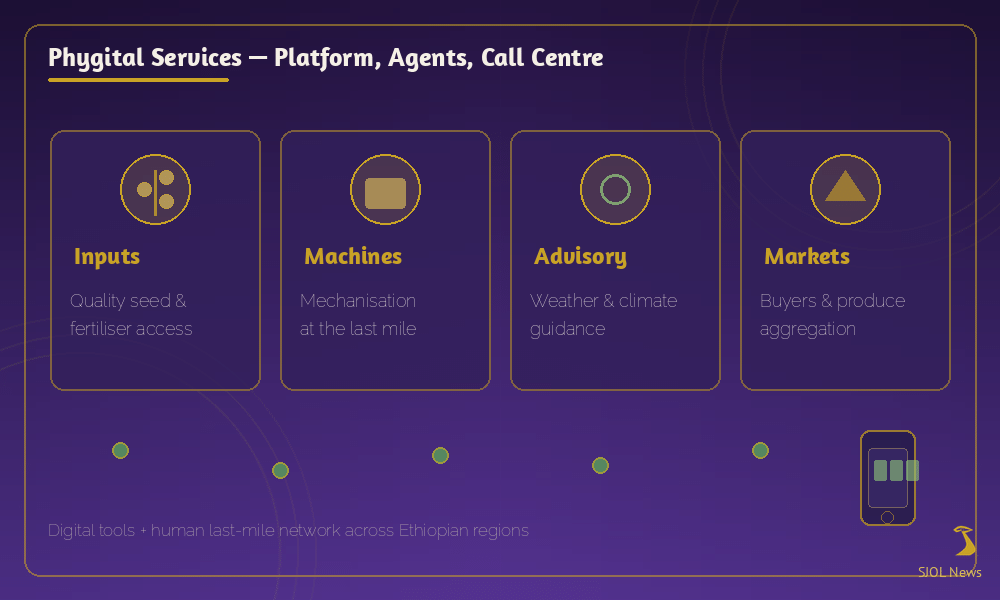
Lersha’s model is “phygital”: a digital platform joined to a last-mile network of field agents and a central call centre. Through that stack, farmers can reach agricultural inputs, mechanisation, financing, market connections, and weather and climate advisory — services that too often arrive fragmented or not at all.
Closed-loop finance, not cash-only loans
A central innovation is how financing works. Rather than pushing cash loans alone, Lersha links farmers with banks, insurers, input suppliers, and agricultural buyers. Financing is often delivered in-kind — as inputs and mechanisation — with repayment tied to produce aggregation and sales. That closed loop is designed to reduce risk, strengthen repayment, and keep value circulating through the farm economy.
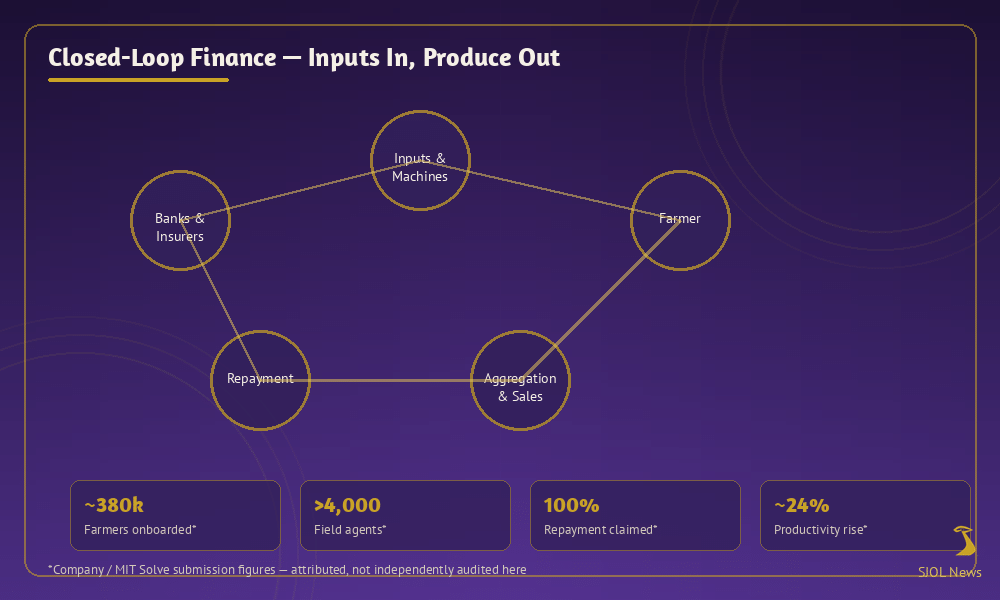
Company-reported figures from Lersha’s MIT Solve submission (attribute as company/submission data, not independent audit) include roughly 380,000 farmers onboarded, more than 4,000 field agents, a claimed 100% repayment rate, about a 24% productivity increase, and nearly a 30% rise in farmer incomes. The company also states an aim toward 1 million active farmers by 2030.
Ethiopia’s finance gap — and a continental horizon
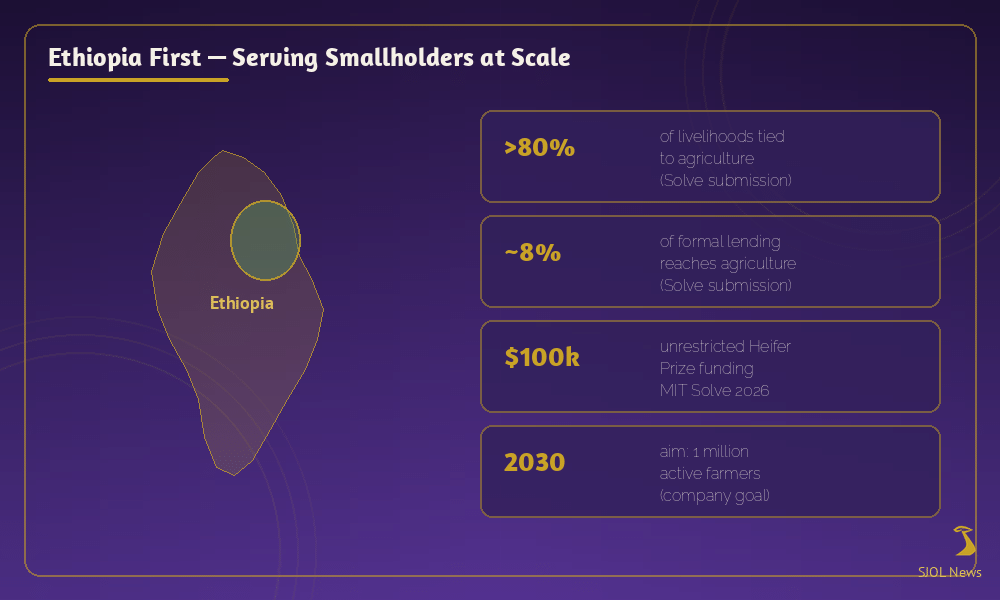
Context from the same MIT Solve submission is stark: in Ethiopia, agriculture supports more than 80% of livelihoods, yet only around 8% of formal lending reaches the sector. Lersha operates across several Ethiopian regions and maintains a liaison office in Nairobi. The company’s site also lists a wider footprint that includes Kenya, South Sudan, and the Democratic Republic of the Congo — expansion language that should be read as stated ambition and presence, not a claim we invent beyond the sources.
Serving the farmer first is self-determination
Pan-African progress is measured in harvests, youth jobs along the last mile, and whether rural communities can plan with climate data and fair markets. A prize does not replace the daily work of agents and farmers — but unrestricted capital and a Solver network can help a working model reach further without bending its purpose.
Lersha’s win is a reminder: when African founders design for the farmer’s full cycle — input, advice, machine, finance, sale — the continent’s food system becomes less dependent on fragmented luck and more on designed dignity.
Watch
Watch — The i-Capital Africa Institute: “Ethiopian Smallholders Farmers’ Access to Finance_Abrhame Endrias”
https://www.youtube.com/watch?v=xoVnu1doQMQ
Learn more
- Business Tech Africa (1 Oct 2026): Ethiopian agritech startup Lersha wins $100,000 Heifer Prize at MIT Solve 2026
- MIT Solve solution page: Lersha on MIT Solve
- Lersha: lersha.com
- The Next Africa (optional): Lersha receives $100,000 MIT Solve prize













You must be logged in to post a comment.