


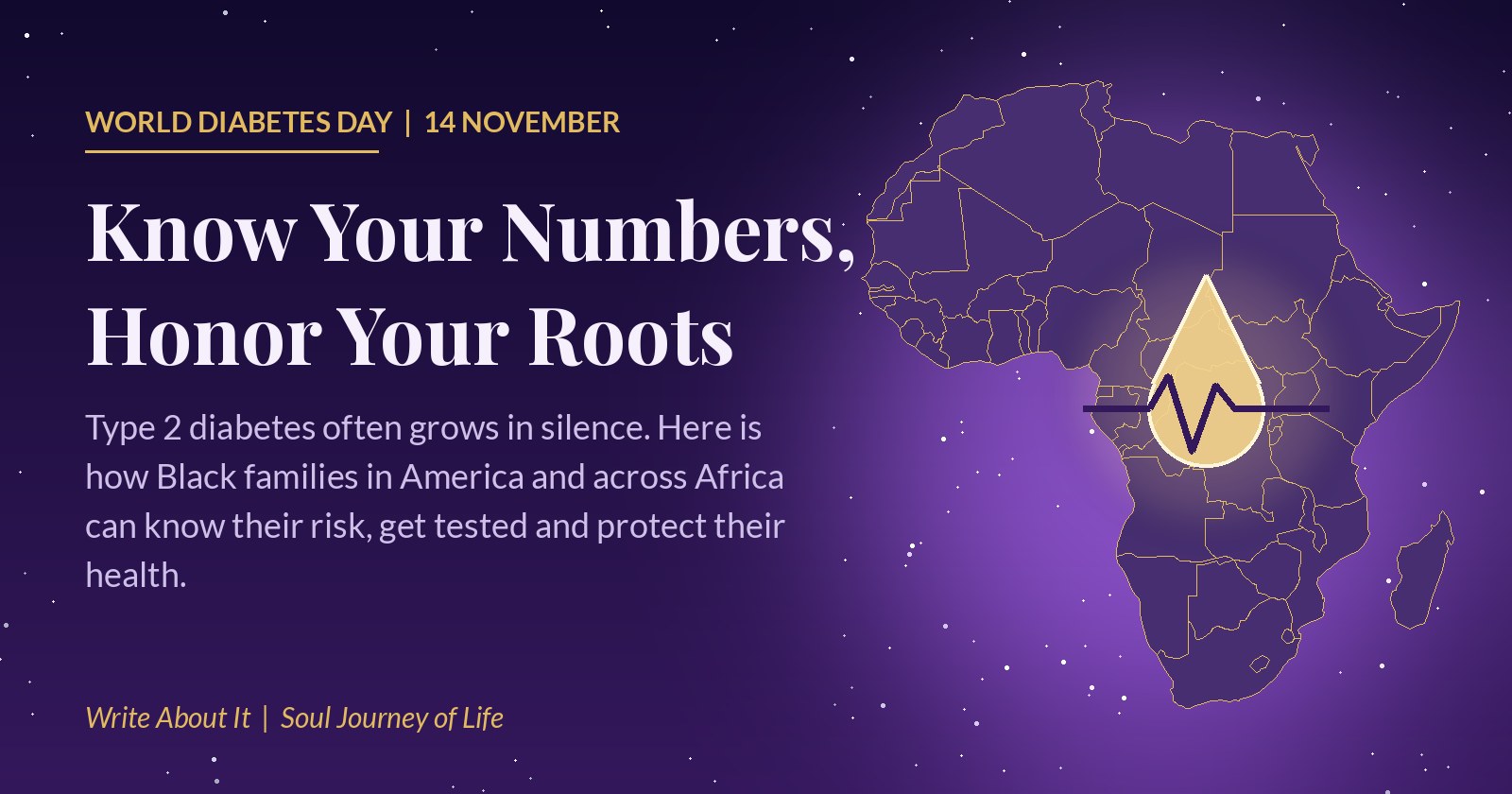

November is Diabetes Awareness Month, and Saturday, 14 November, is World Diabetes Day. The theme set by the International Diabetes Federation (IDF) is “Early action on diabetes,” with a focus on early diagnosis and risk reduction. For our families in America, across Africa and throughout the diaspora, that message is timely.
Please note: this is general health information from public health sources, not medical advice. Talk with your doctor, nurse or community health worker about your own health.
Why this matters for our people
In the United States, 12.2% of non-Hispanic Black adults had diagnosed diabetes in 2021 to 2023, compared with 7.1% of non-Hispanic White adults, according to the American Diabetes Association’s summary of the CDC’s National Diabetes Statistics Report. The CDC estimates that 27.6% of U.S. adults with diabetes, 11.0 million people, are undiagnosed, and that another 115.2 million adults have prediabetes: blood sugar higher than normal, but not yet high enough to be called diabetes.
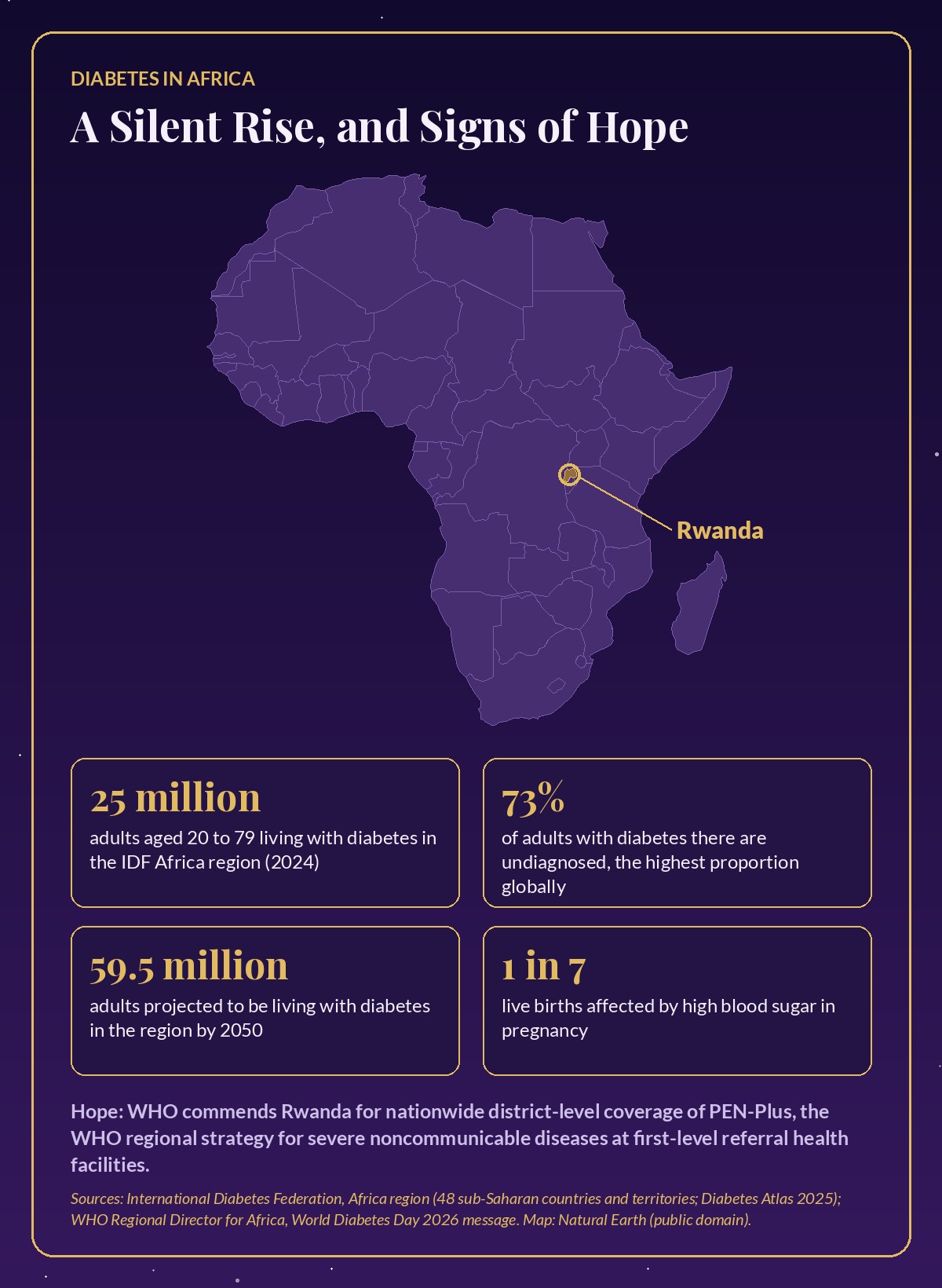
Across Africa, the IDF estimates that 25 million adults aged 20 to 79 in its Africa region, which covers sub-Saharan Africa, were living with diabetes in 2024, and that 73% of them were undiagnosed. The WHO Regional Office for Africa calls this “the highest proportion globally.” Dr Mohamed Janabi, WHO Regional Director for Africa, cited the IDF estimate of 24.6 million adults, “a number projected to reach 59.5 million by 2050.”
In our view, these numbers are not a reason for fear; they are a call to act early.
Know your risk
According to the CDC, you are at higher risk for prediabetes and type 2 diabetes if you:
- have overweight or obesity
- are age 45 or older
- have a parent, brother or sister with type 2 diabetes
- are physically active less than 3 times a week
- have ever had gestational diabetes (diabetes during pregnancy) or given birth to a baby who weighed over 9 pounds
- are African American, Hispanic or Latino, American Indian or Alaska Native
Family stories are health tools: ask your elders who in the family has lived with diabetes, and write it down.
Know the signs, but do not wait for them
Type 2 diabetes symptoms often take years to develop, and some people notice none at all, the CDC says. Signs can include:
- peeing often, and feeling more thirsty and hungry
- losing weight without trying
- tiredness, or blurry vision
- cuts, sores or wounds that are very slow to heal
- dark patches of skin around the neck, armpits or groin
- numbness or tingling in the hands or feet
Get tested and know your numbers
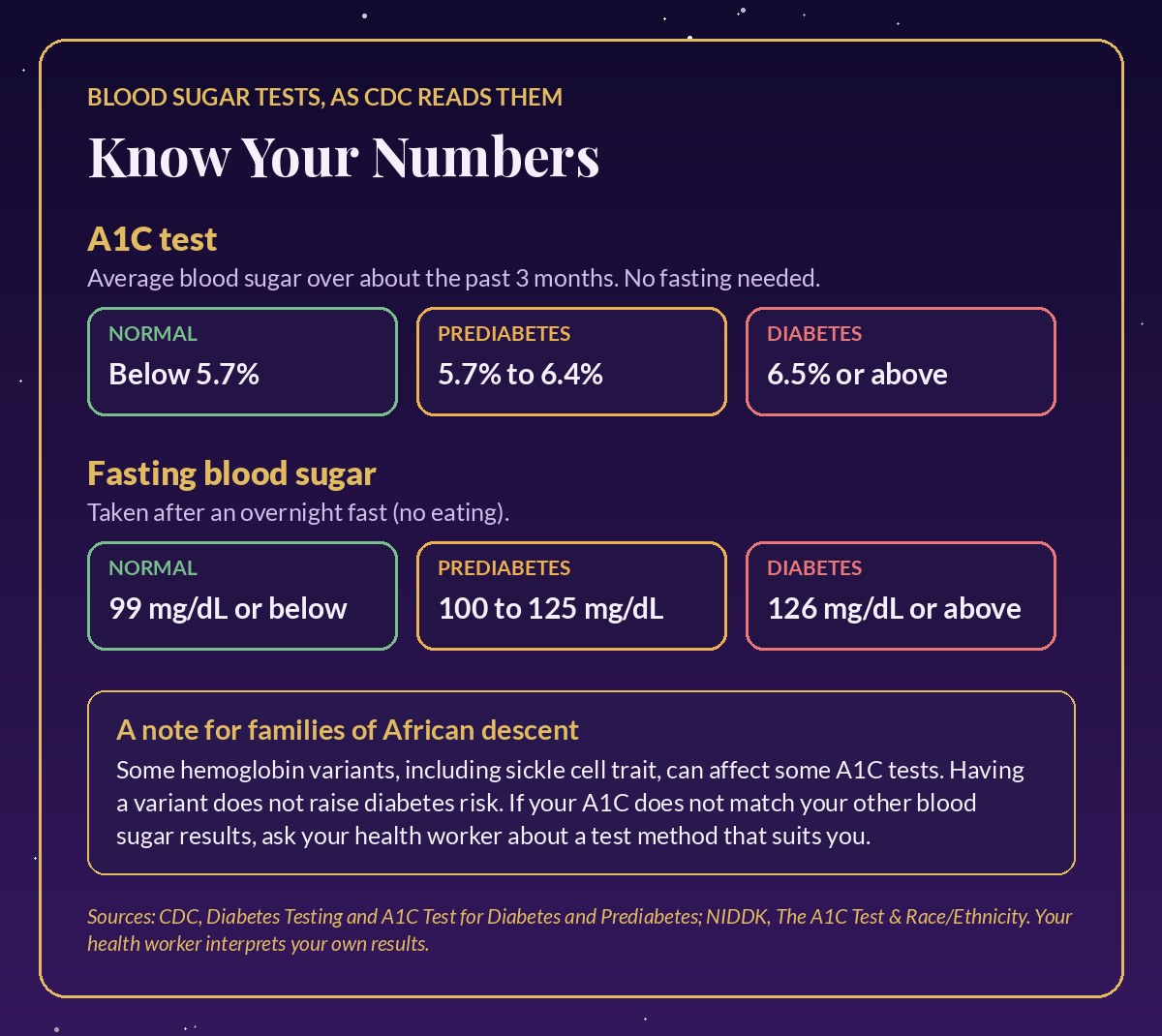
The CDC advises getting an A1C test if you are over age 45, or if you are younger, have overweight and have any other risk factor. The A1C shows your average blood sugar over about three months and needs no fasting; a fasting blood sugar test is taken after an overnight fast. The CDC reads results this way:
- A1C: normal below 5.7%; prediabetes 5.7% to 6.4%; diabetes 6.5% or above.
- Fasting blood sugar: normal 99 mg/dL or below; prediabetes 100 to 125 mg/dL; diabetes 126 mg/dL or above.
A note for families of African descent: some hemoglobin variants, including sickle cell trait, can affect some A1C tests. The NIDDK says about 1 in 13 African Americans has sickle cell trait. A variant does not increase your risk for diabetes, but if your A1C does not match your other blood sugar results, ask your health worker about an A1C method not affected by your variant, or other glucose tests.
Food from our own table
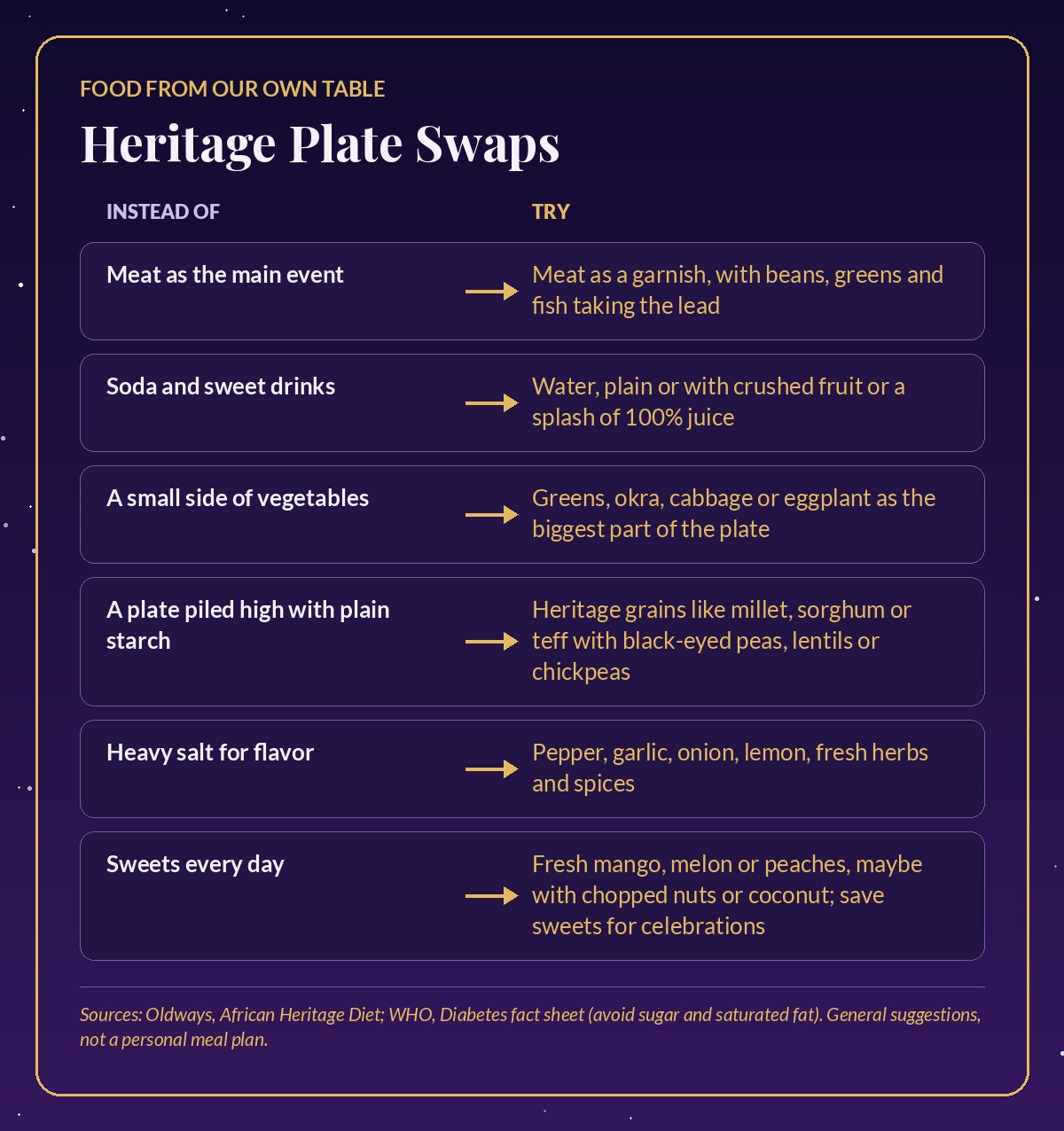
Oldways describes the African Heritage Diet, drawn from the food traditions of Africa, the Caribbean, parts of South America and the American South, as including “lots of vegetables (especially leafy greens), fresh fruits, roots and tubers, nuts and peanuts, beans, and staple whole grain foods.” It suggests using meat “as a garnish instead of a main course,” pairing millet, sorghum or teff with black-eyed peas, lentils or chickpeas, and making water your go-to drink. The World Health Organization (WHO) advises a healthy diet that avoids sugar and saturated fat.
In our view, this is less a diet than a homecoming. Greens, okra, beans, groundnuts and whole grains fed generations of our people. Keep celebration dishes for celebrations, and enjoy them with a full heart.
Move, rest and breathe free
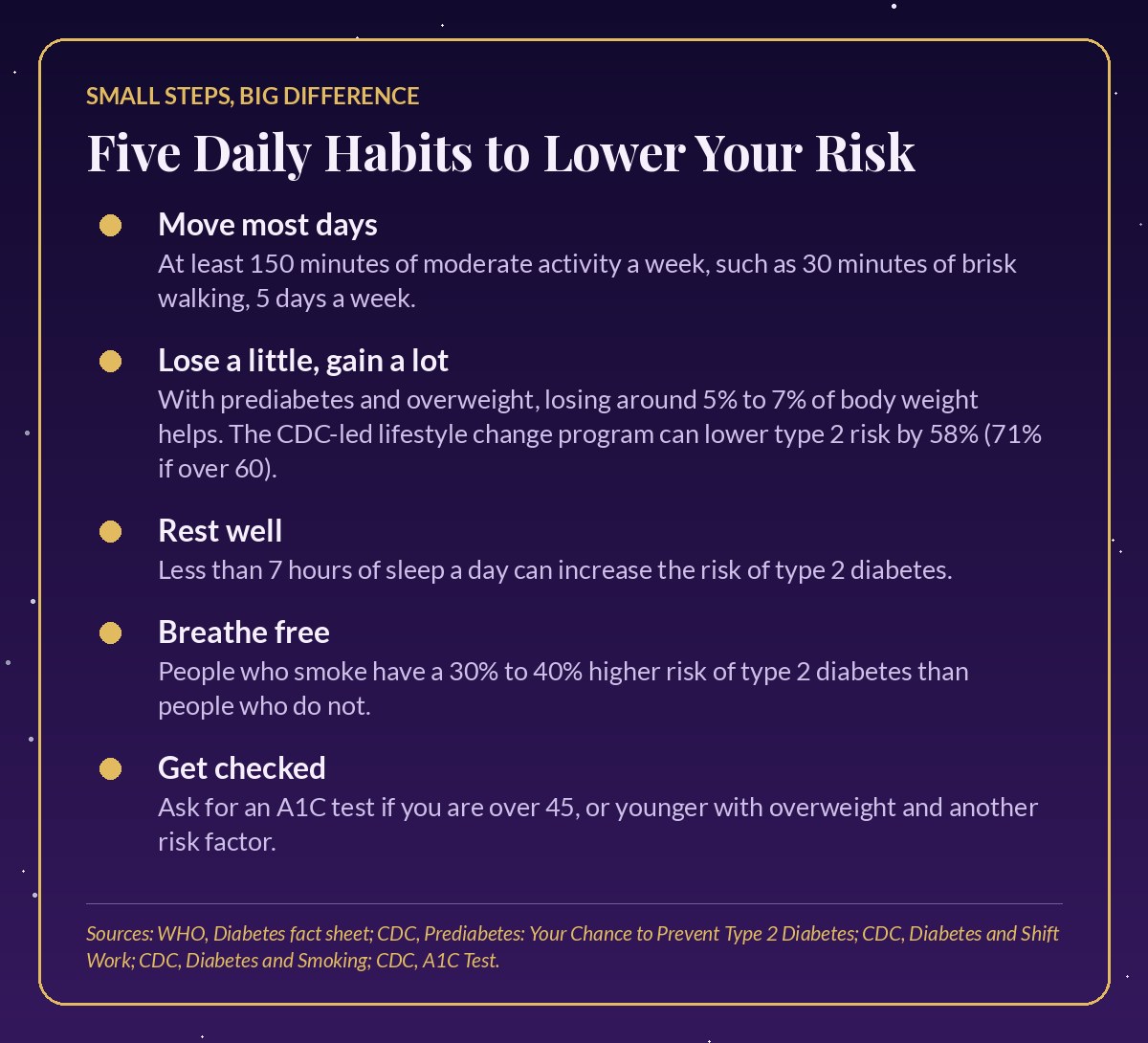
- Move. WHO advises at least 150 minutes of moderate exercise each week. The CDC puts it as 30 minutes of brisk walking a day, 5 days a week. Dance, garden, walk to the market or the masjid; it all counts.
- Lose a little, gain a lot. If you have prediabetes and overweight, the CDC says losing a small amount of weight, around 5% to 7% of body weight, lowers your risk. Its National Diabetes Prevention Program lifestyle change program can lower the risk for type 2 diabetes by 58% (71% for those over age 60).
- Rest. The CDC says that getting less than 7 hours of sleep a day can increase the risk of type 2 diabetes.
- Breathe free. People who smoke have a 30% to 40% higher risk of developing type 2 diabetes than people who do not, according to the CDC.
Signs of hope across Africa
In his World Diabetes Day 2026 message, Dr Janabi said WHO and partners are helping countries strengthen diabetes services in primary health care and first-level referral facilities, through packages such as WHO PEN, HEARTS-D and PEN-Plus. He commended “Rwanda for achieving nationwide district-level coverage of PEN-Plus,” while noting that significant gaps remain. His message to all of us was simple: “Know the symptoms. Do not ignore the warning signs. Seek testing and care early. Encourage others to do the same.”
Three things to do this week
- Check your risk. Take the free type 2 diabetes risk test on the World Diabetes Day website.
- Book a blood sugar test. If you are over 45 or have any risk factor above, ask for an A1C or fasting blood sugar test, and note your numbers.
- Cook one heritage meal and take one family walk. Fill the pot with greens and beans, and walk together after you eat.
Our ancestors carried knowledge of land, food and healing through every hardship. Knowing our numbers is one more way to honor them and to be here for the generations after us. Share this with someone you love, and walk to that test together.
Sources
- International Diabetes Federation: World Diabetes Day 2026, Early action on diabetes
- International Diabetes Federation: Africa region, Diabetes in Africa 2024
- WHO Regional Office for Africa: World Diabetes Day 2026 message from Regional Director Dr Mohamed Janabi (5 November 2026)
- World Health Organization: Diabetes fact sheet (3 November 2026)
- American Diabetes Association: Statistics About Diabetes
- CDC: National Diabetes Statistics Report (updated 16 September 2026)
- CDC: Diabetes Risk Factors
- CDC: Symptoms of Diabetes
- CDC: Diabetes Testing
- CDC: A1C Test for Diabetes and Prediabetes
- CDC: Prediabetes, Your Chance to Prevent Type 2 Diabetes
- CDC: Diabetes and Shift Work
- CDC: Diabetes and Smoking
- NIDDK: The A1C Test & Race/Ethnicity
- NIDDK: Sickle Cell Trait & Other Hemoglobinopathies & Diabetes
- Oldways: African Heritage Diet









You must be logged in to post a comment.