



October is Breast Cancer Awareness Month. Across our village, many families have a mother, aunt, sister or friend whose story belongs in this conversation. This post is not about fear. It is about knowledge, and about the simple, practical steps that help find breast cancer early, when it is most treatable.
Please note: this article shares general health information from public health sources. It is not medical advice. Talk with a doctor, nurse or other qualified clinician about your own health.
Why this conversation matters for Black women
According to the American Cancer Society (ACS), breast cancer is the most commonly diagnosed cancer in Black women in the United States, and in 2022 it was again their leading cause of cancer death. ACS estimates 40,530 new cases and 6,170 deaths among Black women in 2025, and about one in nine Black women will be diagnosed in her lifetime.
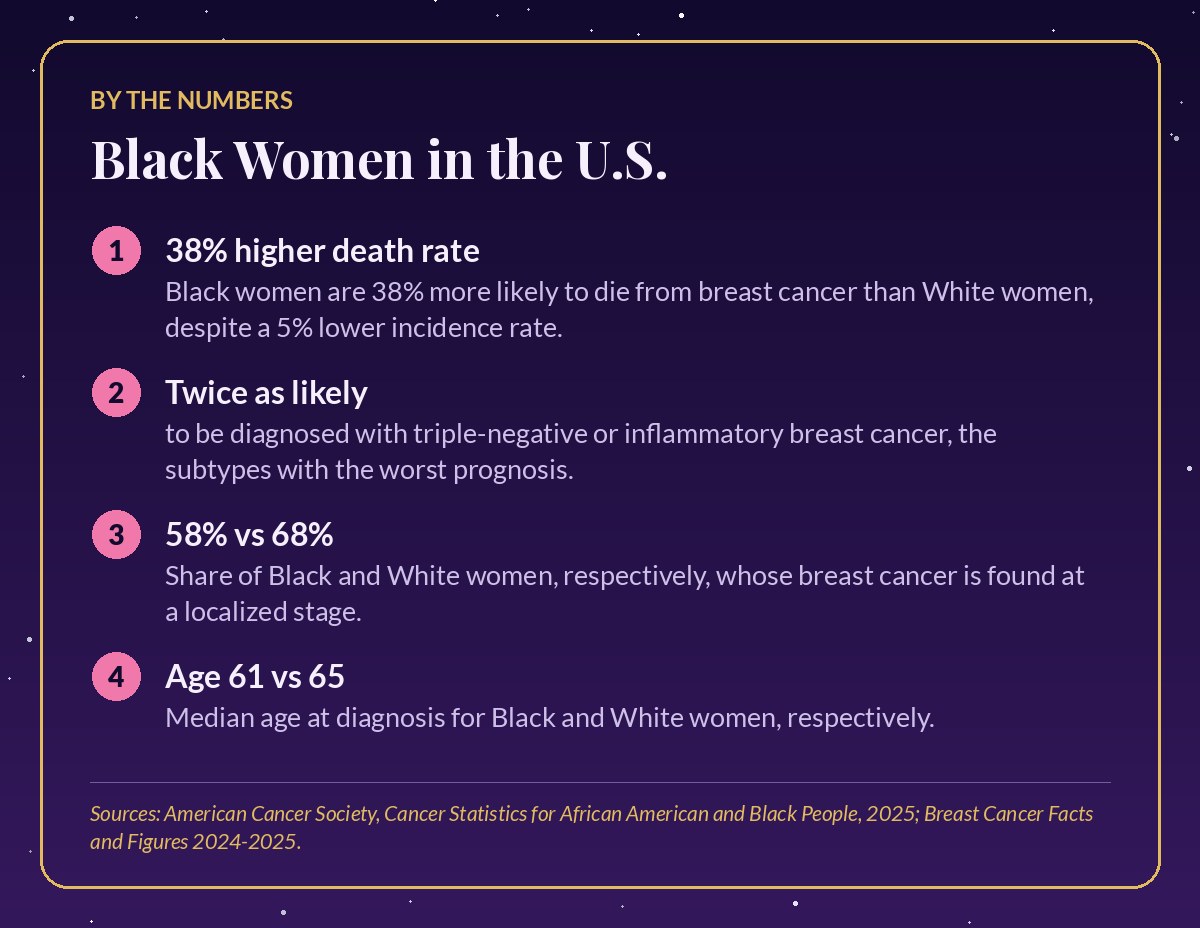
The deepest gap is in survival. Black women are 5% less likely than White women to be diagnosed with breast cancer, yet 38% more likely to die from it, according to ACS. ACS points to several reasons:
- Later diagnosis. Only 58% of Black women are diagnosed at a localized stage, compared with 68% of White women.
- More aggressive subtypes. Black women are twice as likely to be diagnosed with triple-negative or inflammatory breast cancer, the subtypes with the worst prognosis.
- Younger diagnoses. The median age at diagnosis is 61 for Black women and 65 for White women, and among women younger than 40, rates are higher in Black women.
- Unequal care. Black women are more likely to face delays in follow-up after an abnormal screening and less access to timely, high-quality treatment.
There is real reason for hope. ACS reports that Black and White women have similar survival when breast cancer is found at a localized stage, and the breast cancer death rate among Black women has dropped 28% since its peak in 1995. Early detection and timely, complete treatment save lives.
What the screening guidance says
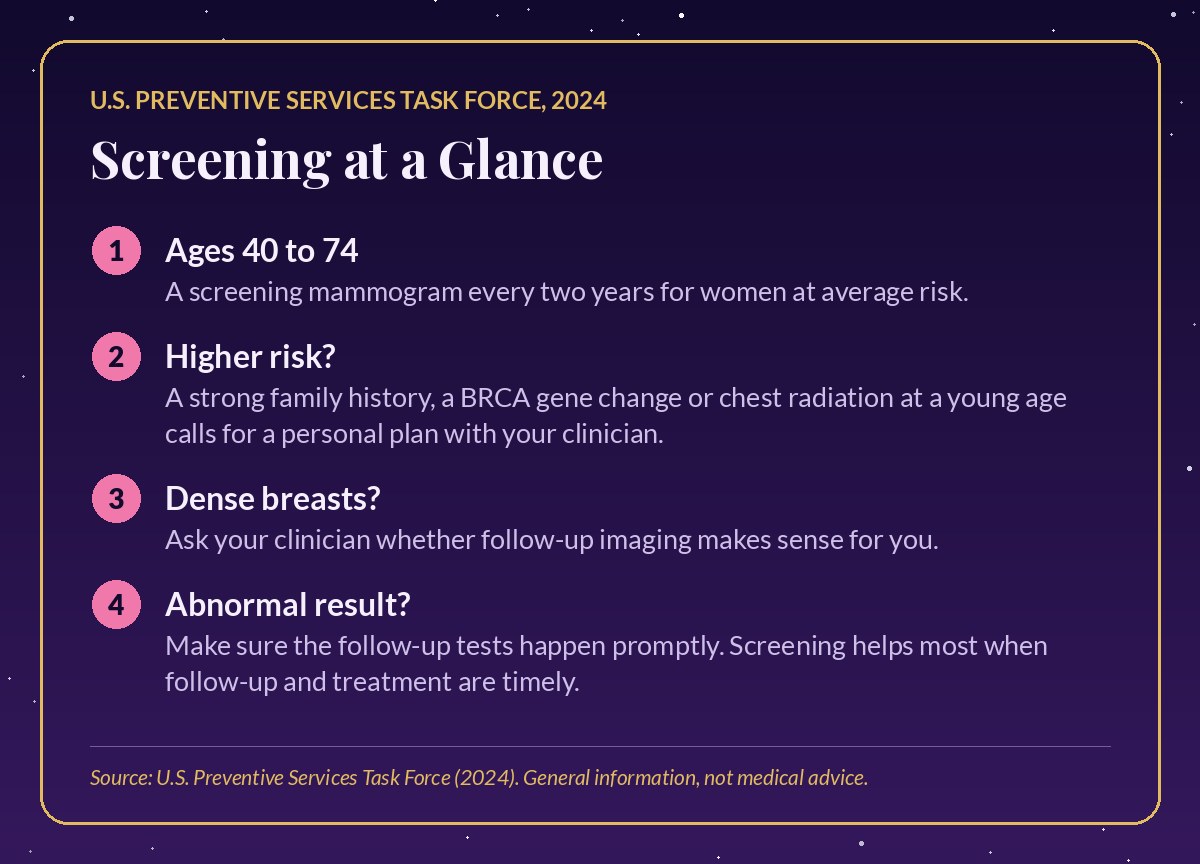
In 2024, the U.S. Preventive Services Task Force (USPSTF) updated its guidance: women at average risk should have a screening mammogram every two years from age 40 through 74. The Task Force calls starting screening at 40 an important first step for Black women, while stressing that fair, timely follow-up and effective treatment are just as essential.
Other groups differ on the details: ACS suggests yearly screening from 45 to 54, with the option to start at 40, and the American College of Radiology recommends yearly mammograms from 40. Ask your clinician which schedule fits you.
The USPSTF guidance is meant for people at average risk. It does not cover those with a BRCA1 or BRCA2 gene change, chest radiation at a young age, or a past breast cancer, who should work out a personal plan with their clinician. Nearly half of all women have dense breasts, which raises risk and can make mammograms less effective; if you are told yours are dense, ask about your options.
Know your family story early
The American College of Radiology recommends a breast cancer risk assessment for everyone by age 25. This conversation with your clinician about your family and health history can show whether you should start screening earlier or add other tests.
The World Health Organization (WHO) notes that family history raises risk, but most women diagnosed have no known family history, so its absence does not guarantee low risk. In our view, the family gathering is one of the most powerful health tools we have: ask your elders who in the family has had cancer, which kind and at what age, and write it down.
Know the signs
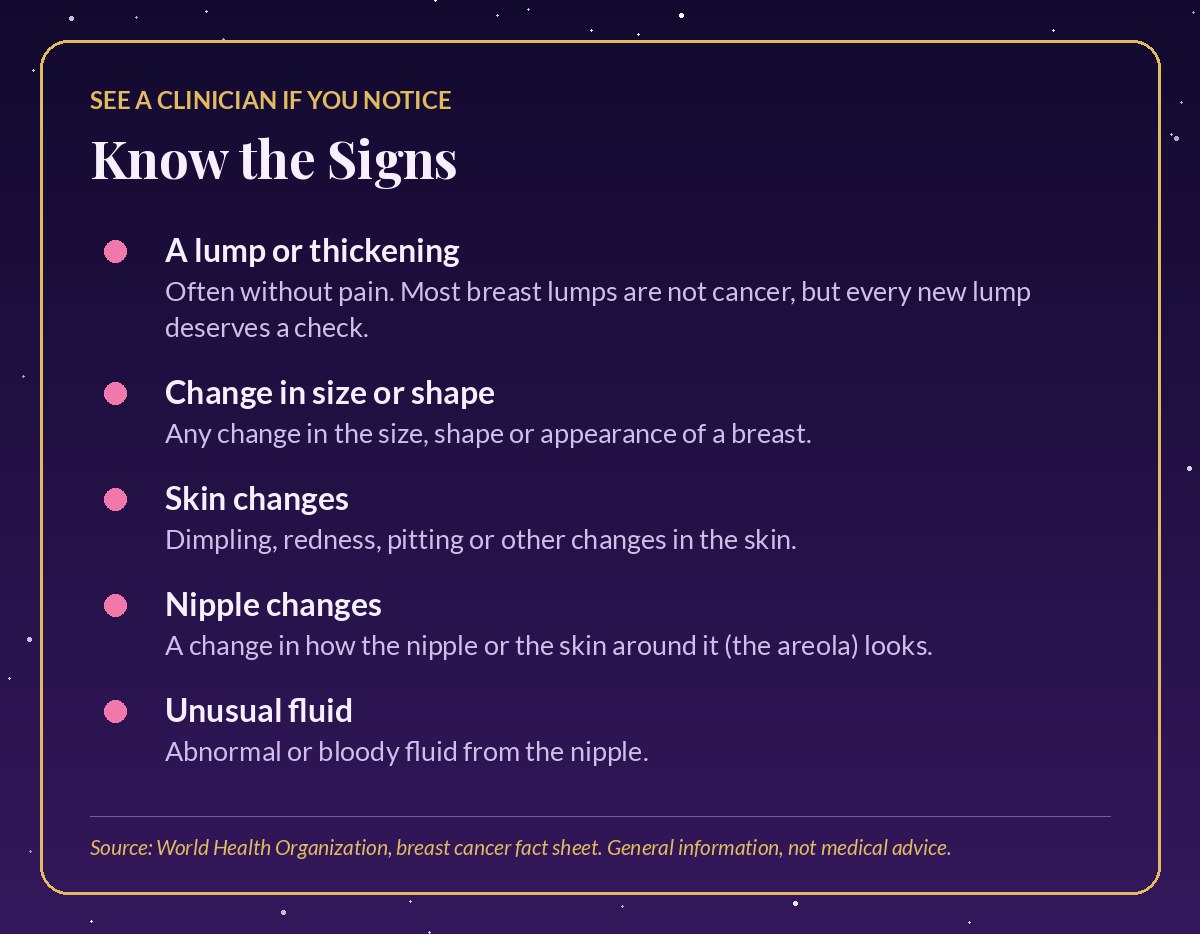
Knowing what is normal for your body matters at every age. WHO lists these possible signs:
- A lump or thickening in the breast, often without pain
- A change in the size, shape or appearance of a breast
- Dimpling, redness, pitting or other changes in the skin
- A change in the appearance of the nipple or the skin around it (the areola)
- Abnormal or bloody fluid from the nipple
Most breast lumps are not cancer, but any of these changes is a reason to see a clinician promptly, even if nothing hurts.
The picture across Africa
WHO estimates that 2.4 million women were diagnosed with breast cancer worldwide in 2024, and 694,000 people died of it. The burden is not shared equally. In countries with a very high Human Development Index (HDI), 1 in 12 women will be diagnosed in her lifetime and 1 in 71 will die of it; in countries with a low HDI, 1 in 27 will be diagnosed and 1 in 48 will die of it.
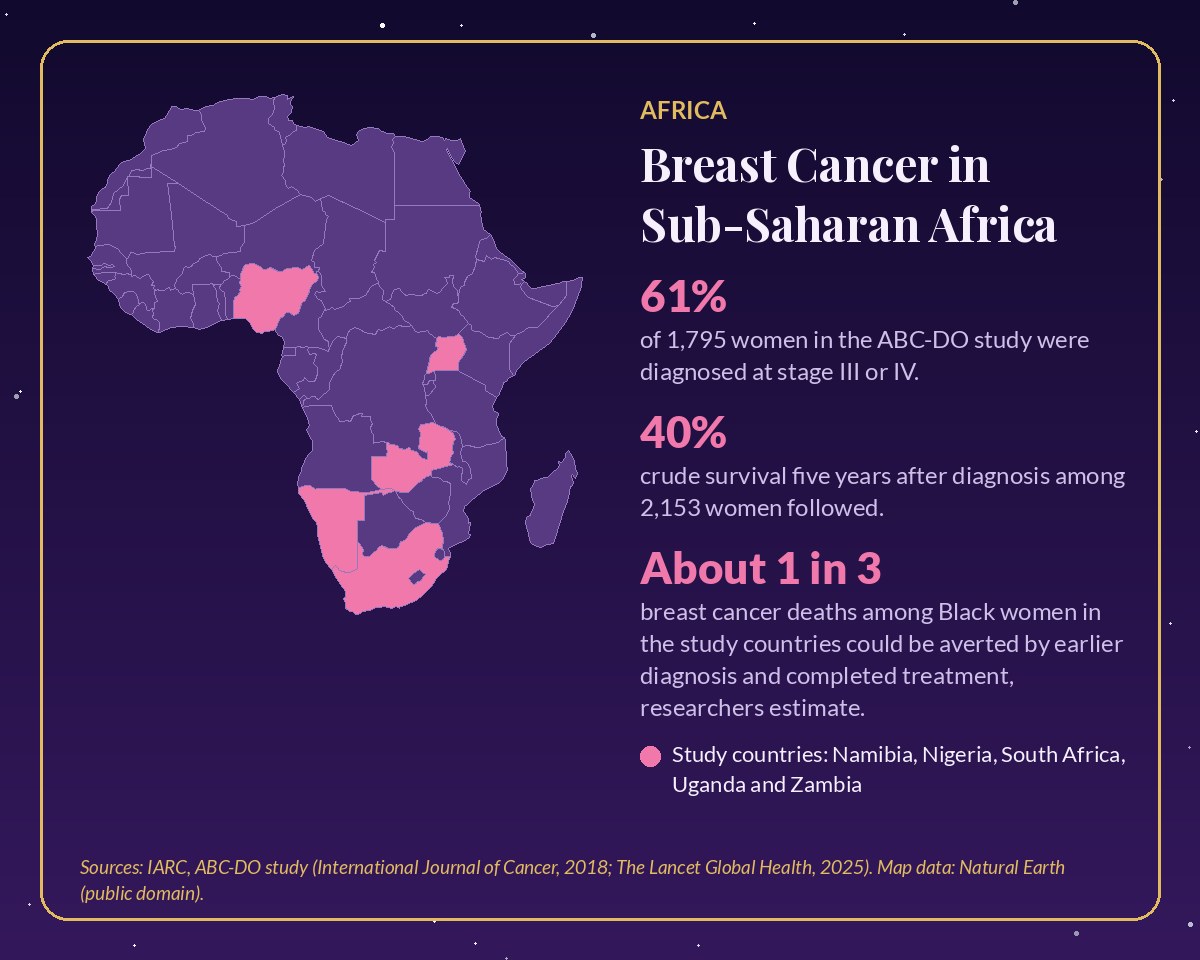
The African Breast Cancer: Disparities in Outcomes (ABC-DO) study, by the International Agency for Research on Cancer (IARC) and partners in Namibia, Nigeria, South Africa, Uganda and Zambia, helps explain why. Of 1,795 women studied, 61% were diagnosed at stage III or IV. Among 2,153 women followed for up to seven years, crude survival was 40% at five years.
In 2021, WHO launched the Global Breast Cancer Initiative, which aims to cut breast cancer deaths worldwide by 2.5% a year and avert 2.5 million deaths by 2040. Its three pillars are health promotion for early detection, timely diagnosis and comprehensive breast cancer management. The ABC-DO researchers estimate that meeting these goals could avert about one third of breast cancer deaths among Black women in the study countries.
Three things to do this month
- Check your screening date. If you are 40 to 74, find out when your last mammogram was and book the next one if it is due. If you are younger, ask your clinician for a risk assessment.
- Gather your family health story. Ask relatives about cancers in the family, including the type and the age at diagnosis, and share what you learn with your clinician.
- Learn your normal and follow through. Report any breast change promptly, and if a screening result is abnormal, make sure every follow-up appointment happens.
Caring for our bodies honors the legacy we carry and the generations to come. Share this with a sister, mother, daughter or friend, and walk to that appointment together if you can.
Sources: American Cancer Society, Cancer Statistics for African American and Black People, 2025, and Breast Cancer Facts & Figures 2024-2025; U.S. Preventive Services Task Force, Breast Cancer: Screening (2024); World Health Organization, Breast Cancer Fact Sheet and Global Breast Cancer Initiative; International Agency for Research on Cancer, ABC-DO study (International Journal of Cancer, 2018; The Lancet Global Health, 2025); Mayo Clinic.
Recommend0 recommendationsPublished in Write About It, Cultural, Perspective












You must be logged in to post a comment.