



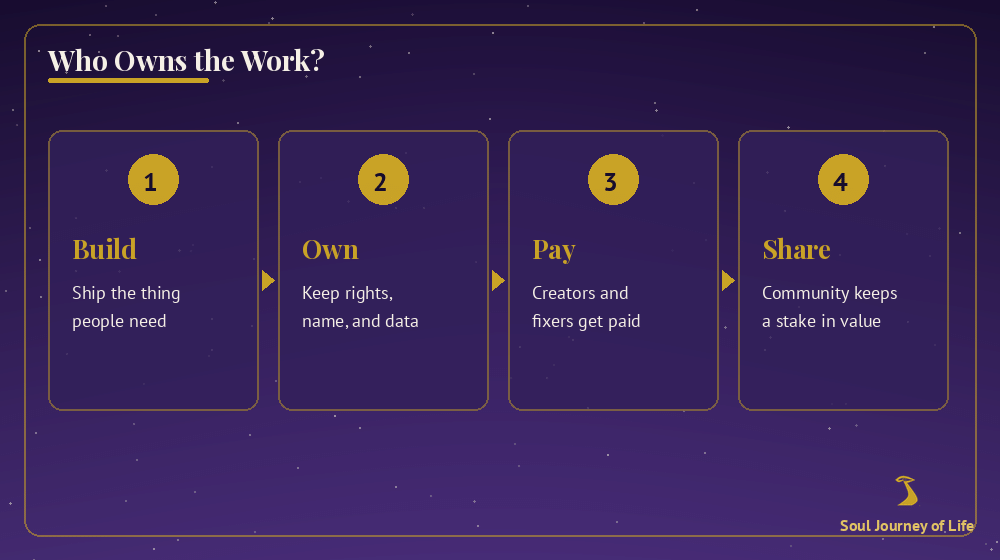
This week’s tech stories share one question: who owns the work, and who gets paid for it? In Nigeria, a developer built a browser game overnight and, nine days later, had investors and advertisers paying for space inside it. In Senegal, a Dakar company is raising money to keep office printers working instead of throwing them away. In Newark, a Black-owned company wants creators of color to own and license the images and data that teach AI how to see us. And in Memphis, a self-taught builder made a tool to help job seekers get past the software that screens their resumes. Different cities, different products, one lesson: when we build it, we should own it.
What is happening on the ground
Lagos: a game built overnight becomes a company (Oct 1 to 9)
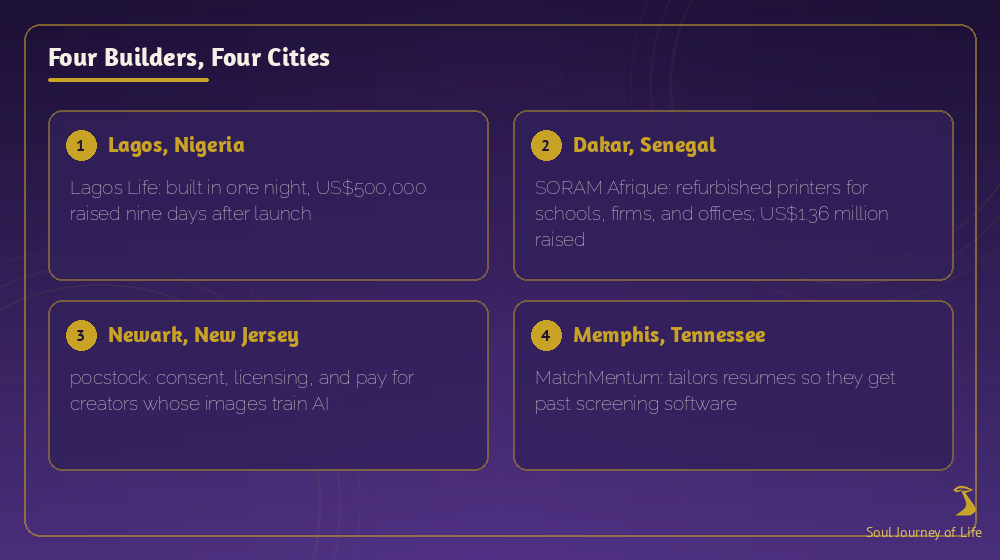
Nigerian software developer Shalom Rayhamen, who is based in the UK, says she started building Lagos Life at 9 pm on 30 September and released it at 7 am the next morning, working through the night with AI tools. It is a free browser game where players create a character, rent a flat, take a job, earn virtual naira, and meet other players in a shared digital Lagos. TechCity reports the idea came from Lagos Run, a danfo-driving browser game released on 26 September by Berlin-based engineer Opeyemi Adeniran.
On 9 October, Rayhamen announced that her company, Vatar, had raised US$500,000 from angel investors at a reported US$10 million valuation. The named backers are Abdulhamid “AB” Hassan of Mono, Nathan Nwachuku of Terra Industries, and Flutterwave co-founder and chief executive Olugbenga “GB” Agboola. Vatar’s co-founders are Rayhamen, Owen Rayhamen, and Anderson Oriahi. Rayhamen says more than 4.7 million people played in the first nine days, and the game’s own dashboard later showed over five million. Both numbers are company-reported and have not been independently audited.
The money so far comes from advertisers. BusinessTech Nigeria reports that a seven-day slot on the game’s airport billboards costs ₦500,000, about US$376, and that Vatar sells branded danfos, storefronts, and company headquarters inside the game. Players are finding their own ways to earn too. One therapist said he booked paid sessions through the game, with the real payment going to his mobile wallet outside it. The outlet also passes on a warning reported by TechCity: anyone offering to buy or sell Lagos Life cash for real naira is not the company, and those trades carry scam risk.
Dakar: giving office printers a second life (Oct 13)
Tech In Africa reports that SORAM Afrique, a Dakar company led by Florian Baudoin, raised US$1.36 million (about €1.2 million) from Saviu Ventures, an investor with offices in Paris and Nairobi, with SORAM’s own management also putting money in. SORAM does not sell new machines. For more than a decade it has refurbished professional printers and put them back to work for small businesses, large firms, government agencies, and schools in Senegal and across West Africa. That keeps equipment out of the waste stream and cuts down on ink and parts.
The outlet says SORAM has served more than 1,000 customers. It now sits inside a holding group, OLU 360, whose three businesses employ 60 people. The group already works in The Gambia and Guinea, and Côte d’Ivoire is next. It is Saviu’s first climate tech deal, and the investor said Africa’s future category leaders “will not only be built in software.”
Newark: creators of color owning the data that trains AI
pocstock, a Black-owned content and data licensing company in Newark, New Jersey, creates and licenses images, video, and datasets that represent communities of color to brands, tech companies, and AI developers. In September it announced an investment from Grammy-winning rapper and entrepreneur Tip “T.I.” Harris. The company says his role is limited to investor, and terms were not disclosed. Finurah revisited the deal on 7 October, linking it to T.I.’s own court fight over buying back his early music masters.
The company says its model is built on consent, licensing, and paying creators, rather than scraping culture first and sorting out payment later. “We want people of color participating as producers, owners and economic contributors, not simply consumers,” said co-founder and CEO Steve Jones. “If AI is going to accurately represent us, it should learn about us directly from us.” T.I. put it this way: “Authenticity cannot be faked, and our stories cannot be told properly without us in the driver’s seat.”
Memphis: helping job seekers reach a human reader
Charisse Morton, a Memphis native who taught herself AI automation while working in fintech, built MatchMentum as a side project and launched it in February 2026. EBONY recently profiled the tool. A job seeker uploads a resume and pastes in a job description. MatchMentum then scores how well the two match, points out gaps, and helps rewrite the resume and cover letter in the language of that role, so it can get past the automated screening software many employers use and reach a human recruiter. The company says it works from the user’s real experience, not invented credentials.
Morton told EBONY that Memphis has fewer corporate jobs and fewer networking doors than many big cities. “So, the only way for us to break out, if we can break out, is to beat an ATS system,” she said, meaning the applicant tracking systems that filter resumes before anyone reads them.
Lessons we can carry
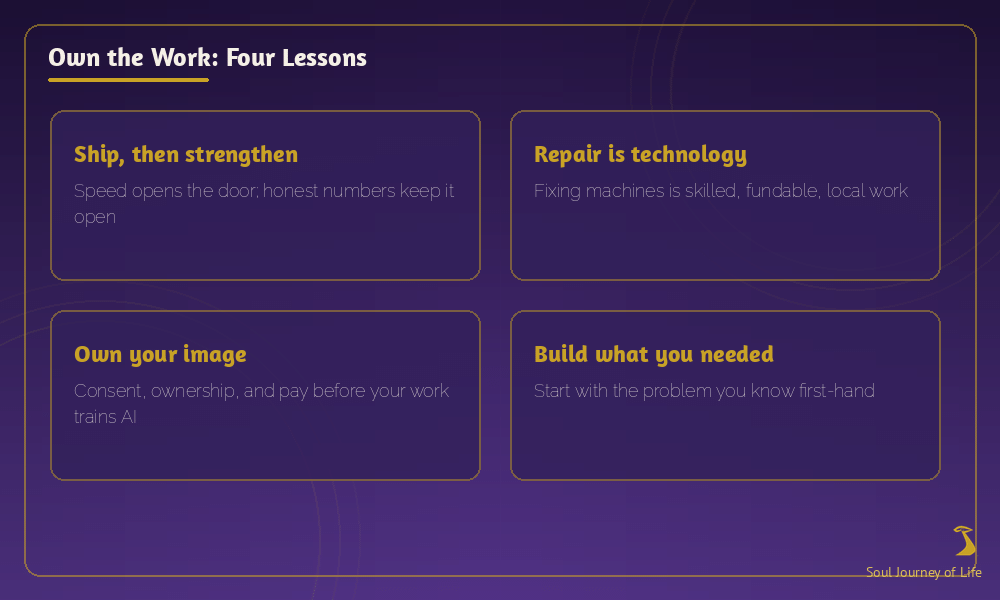
- Ship, then strengthen. Lagos Life went from one night of building to millions of players. Speed opened the door, but lasting value will come from honest numbers and a safe in-game economy.
- Repair is technology too. SORAM shows that fixing and maintaining machines is skilled, fundable work that keeps jobs and value close to home.
- Own your image. If AI is going to learn from our faces and stories, creators should give consent, keep ownership, and get paid. Read the terms before you upload your work anywhere.
- Build the tool you needed. MatchMentum began with one person’s own job hunt and a community that was locked out. The best products often start with a problem you know first-hand.
Encouragement
This week, back a local builder with your attention or your money, ask before you share someone’s photo or voice, get a broken device repaired instead of replaced, and help a friend tailor one job application. Our creativity builds value. Let’s make sure we own a share of it.
Watch: Google is Paying Africans to Build AI | Here’s How to Apply — a clear walkthrough of Google’s Africa Applied AI Lab pathway for African founders.
Keep an eye on: whether Lagos Life delivers its promised mobile apps and keeps players coming back once the novelty fades; SORAM’s move into Côte d’Ivoire; and how creator-owned data companies such as pocstock fare as AI licensing deals grow.
Sources
- BusinessTech Nigeria on Lagos Life’s funding and in-game earning
- Techpoint Africa on Vatar’s valuation
- TechCity explainer on Lagos Life
- Tech In Africa on SORAM Afrique
- pocstock’s announcement via Black PR Wire
- Finurah on T.I., pocstock, and his masters
- EBONY on Charisse Morton and MatchMentum
Soul Journey of Life — Write About It. Conscious. Constructive. United.
Recommend0 recommendationsPublished in Write About It, Black Opinion, Blacktivism, Perspective












You must be logged in to post a comment.