Burkina Faso, Mali, and Niger deepen AES cross-border cooperation from Ouagadougou, while CARICOM reparations advocates advance a Jamaica–Ethiopia repatriation pilot — Jamilah Conteh Speaks.
Write About It · Soul Journey of Life For African & Black American youth · Friday, 18 September 2026
Young ones — hear this gently: your ancestors left you rhythm, memory, and courage to learn aloud. The West African talking drum carried news and wisdom across distance. Technology is that same idea in new clothes: signal with purpose. When you code, design, or fix a page, you translate the drum into a new tongue. Ask: Who does it serve? Who does it heal? Who does it free?
Old rhythms and new tools can carry a message of purpose.
A short fable
An elder told a youth: “Machines amplify whatever heart you put into them. A loud drum with no message is noise. A clear message can wake a whole road.”
Black brilliance
Black intellectual history is a toolkit. Let no algorithm shrink your imagination; curiosity is where kindness begins.
Unity is not only spoken in conference halls. Sometimes it is settled — quietly, instantly — when money moves from one African country to another without first begging a foreign clearing house for permission.
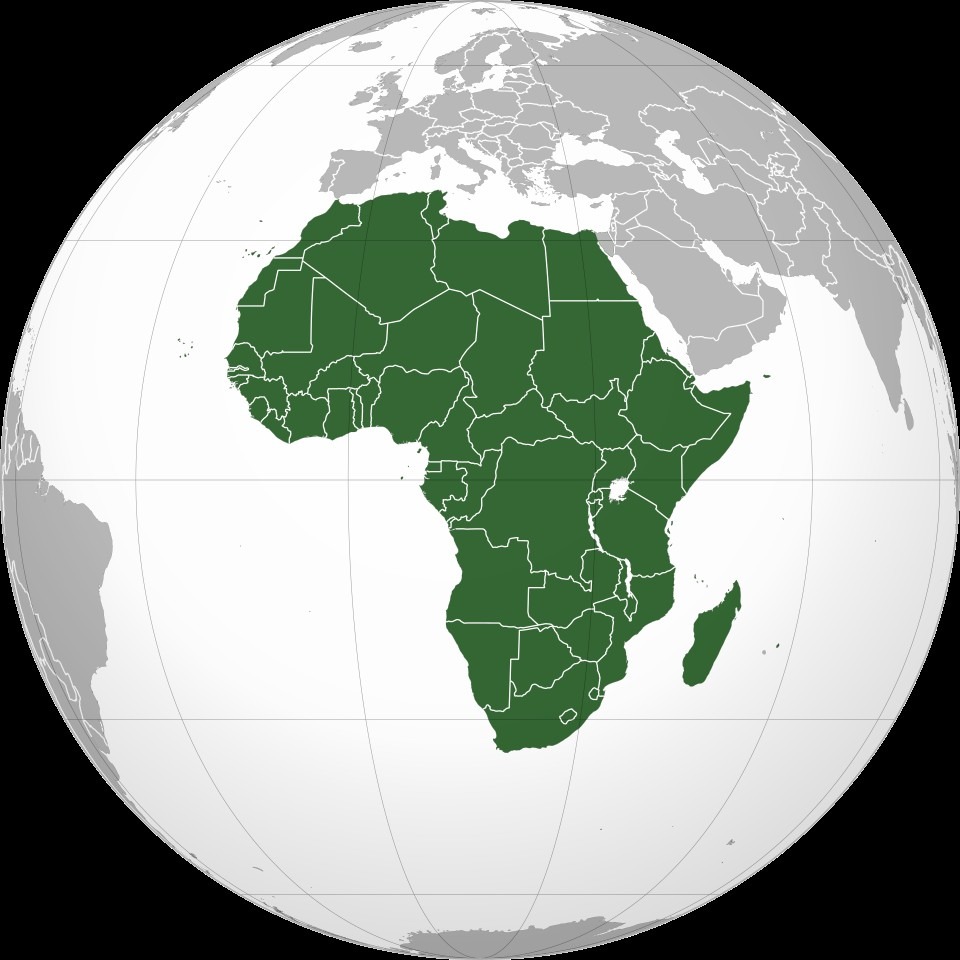
That is the promise of the Pan-African Payment and Settlement System (PAPSS): continental payment rails built so Africans can pay Africans in African currencies, with speed and less friction. Officially presented as a cross-border financial market infrastructure for the continent, PAPSS sits beside the African Continental Free Trade Area (AfCFTA) as practical plumbing for trade — not a slogan, a settlement path.
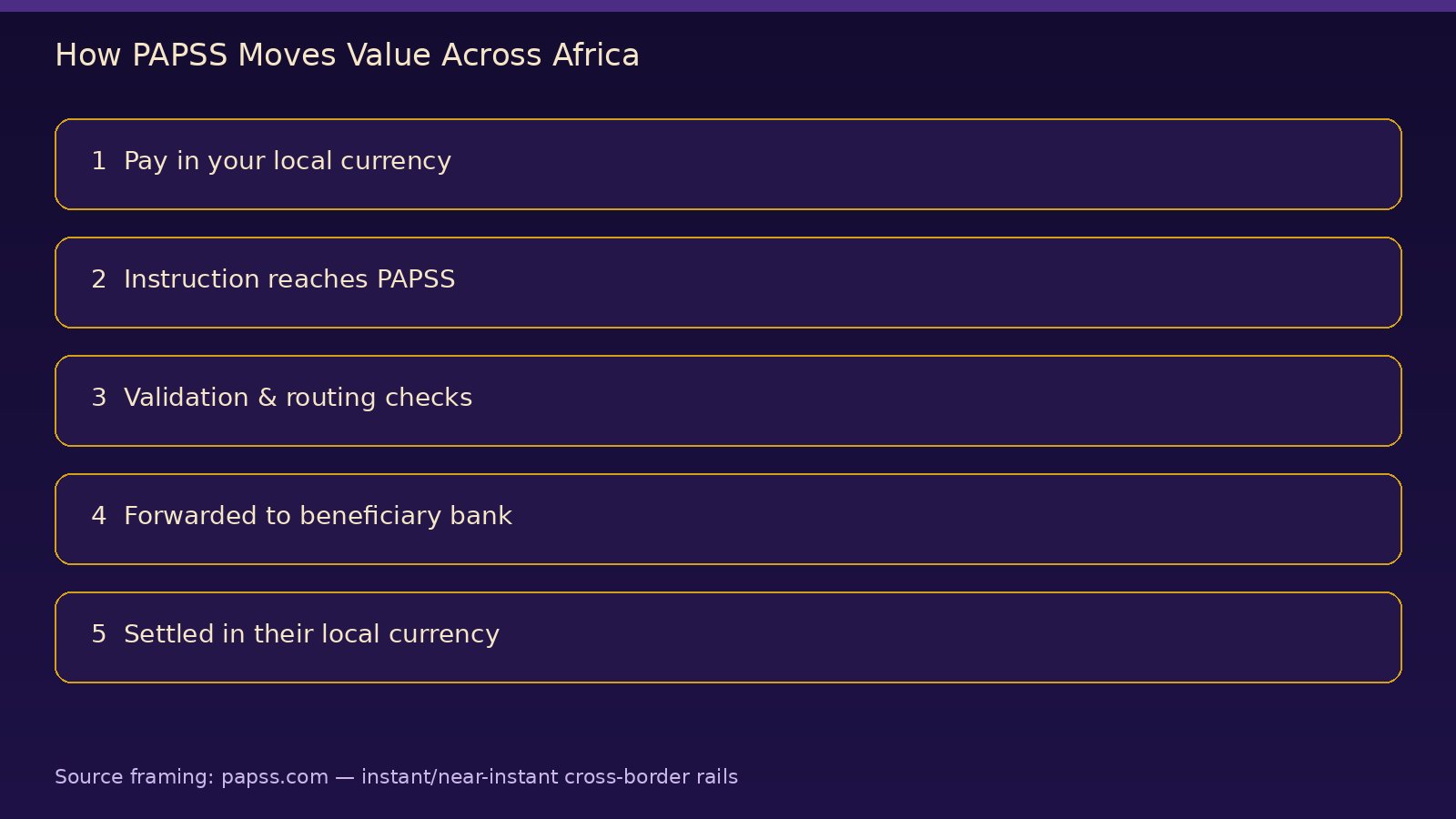
According to the system’s own public description at papss.com, an originator can instruct a payment in local currency through their bank or payment provider; PAPSS validates and routes the instruction; the beneficiary’s institution clears funds in *their* local currency. Instant or near-instant. Fewer historical detours. That is what “simplified payments” means when the continent is serious about trading with itself.
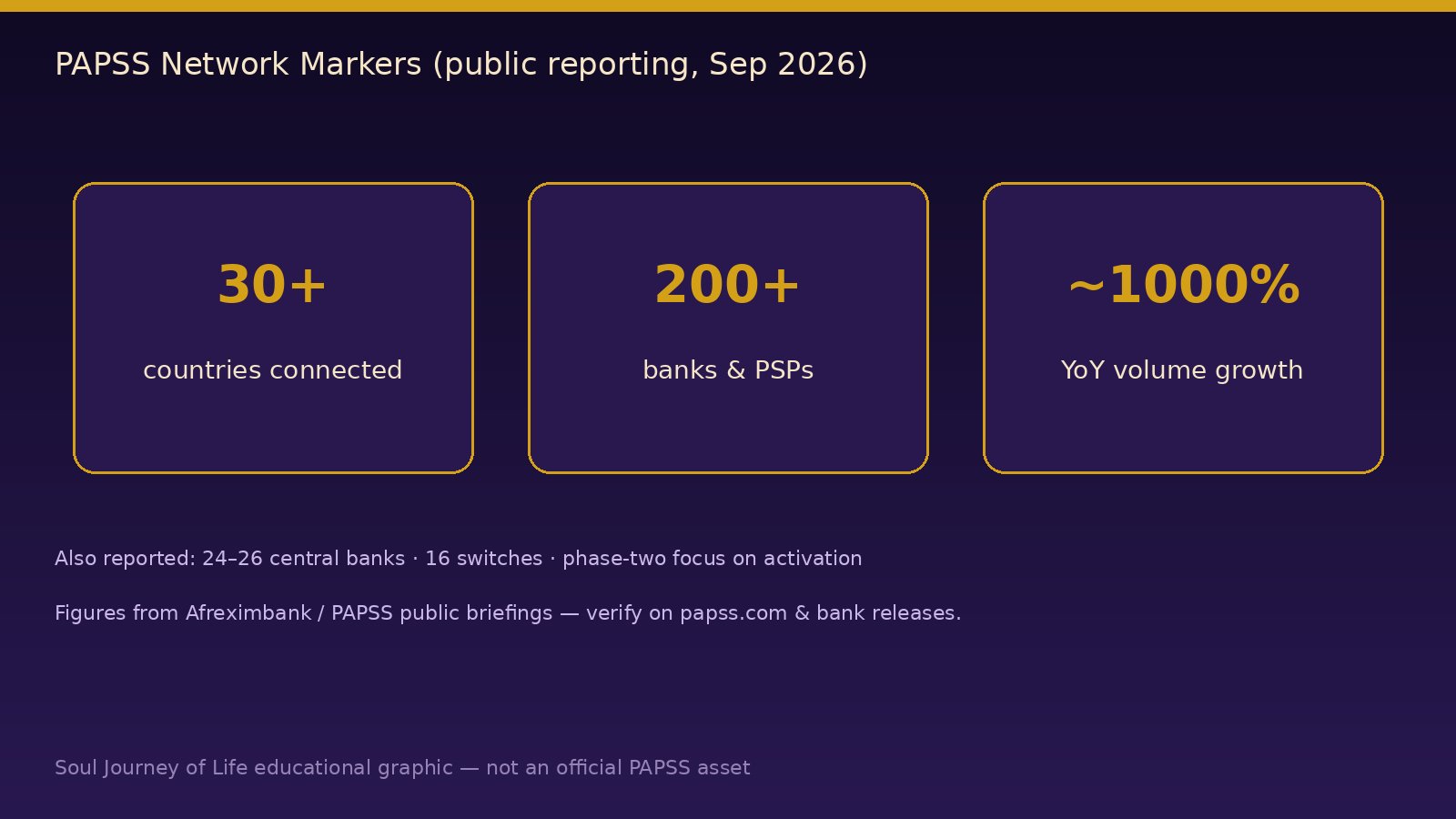
PAPSS was developed with Afreximbank and adopted by the African Union as a key instrument for AfCFTA implementation. Public briefings in September 2026 described a network spanning more than 30 African countries, linking roughly two dozen central banks, 200+ commercial banks and payment service providers, and multiple national/regional switches — with phase two shifting from building the rails toward activating everyday channels businesses and people actually use. Reported year-on-year volume growth has been dramatic; average payment sizes have also shifted as smaller, more frequent flows appear on the network. Treat every figure as a snapshot — verify on papss.com and Afreximbank releases as the map keeps expanding.
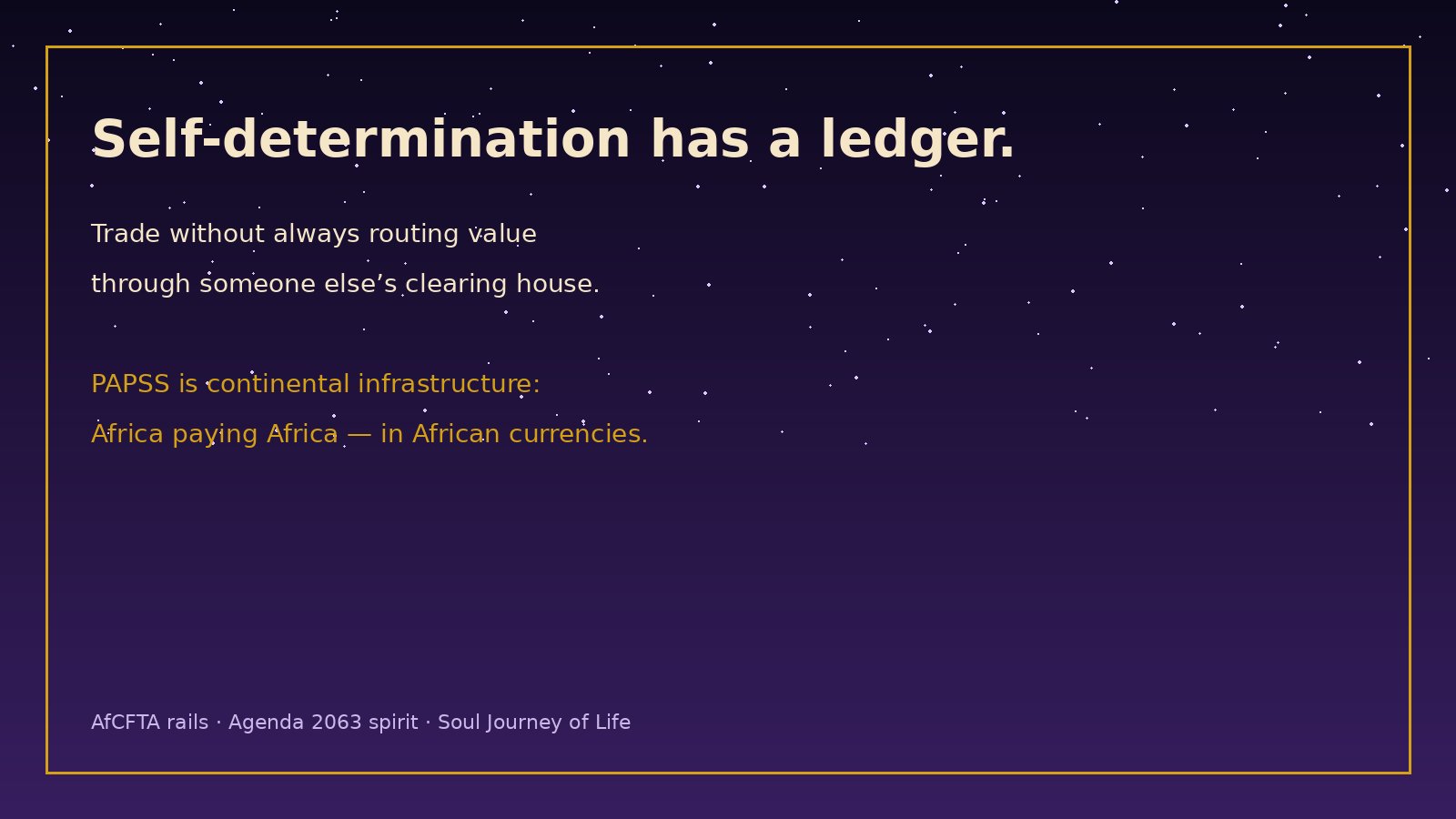
Why does this matter for Pan-Africans on the continent and in the diaspora? Because self-determination has a ledger. When cross-border commerce must always clear through distant intermediaries, time and foreign exchange pressure become a tax on African ambition. Continental rails do not erase every customs barrier or every unfinished tariff schedule — AfCFTA still needs domestic work — but they attack a core choke point: *getting paid across African borders without drowning in delay and cost*.
For small exporters, market women with regional customers, fintech builders, and families sending value home, payment infrastructure is liberation work in a quiet suit. Support African-built rails. Ask your bank whether it connects. Teach the next generation that code, clearing, and currency markets are part of freedom’s toolkit.
Watch: Introducing the #AfCFTA Pan African Payment & Settlement System #PAPSS (African Union)
Unity is not only spoken in conference halls. Sometimes it is settled — quietly, instantly — when money moves from one African country to another without first begging a foreign clearing house for permission.
That is the promise of the Pan-African Payment and Settlement System (PAPSS): continental payment rails built so Africans can pay Africans in African currencies, with speed and less friction. Officially presented as a cross-border financial market infrastructure for the continent, PAPSS sits beside the African Continental Free Trade Area (AfCFTA) as practical plumbing for trade — not a slogan, a settlement path.
According to the system’s own public description at papss.com, an originator can instruct a payment in local currency through their bank or payment provider; PAPSS validates and routes the instruction; the beneficiary’s institution clears funds in *their* local currency. Instant or near-instant. Fewer historical detours. That is what “simplified payments” means when the continent is serious about trading with itself.
PAPSS was developed with Afreximbank and adopted by the African Union as a key instrument for AfCFTA implementation. Public briefings in September 2026 described a network spanning more than 30 African countries, linking roughly two dozen central banks, 200+ commercial banks and payment service providers, and multiple national/regional switches — with phase two shifting from building the rails toward activating everyday channels businesses and people actually use. Reported year-on-year volume growth has been dramatic; average payment sizes have also shifted as smaller, more frequent flows appear on the network. Treat every figure as a snapshot — verify on papss.com and Afreximbank releases as the map keeps expanding.
Why does this matter for Pan-Africans on the continent and in the diaspora? Because self-determination has a ledger. When cross-border commerce must always clear through distant intermediaries, time and foreign exchange pressure become a tax on African ambition. Continental rails do not erase every customs barrier or every unfinished tariff schedule — AfCFTA still needs domestic work — but they attack a core choke point: *getting paid across African borders without drowning in delay and cost*.
For small exporters, market women with regional customers, fintech builders, and families sending value home, payment infrastructure is liberation work in a quiet suit. Support African-built rails. Ask your bank whether it connects. Teach the next generation that code, clearing, and currency markets are part of freedom’s toolkit.
Watch: Introducing the #AfCFTA Pan African Payment & Settlement System #PAPSS (African Union)
Today’s SJOL News noon brief from Jamilah Conteh Speaks.
Hello and welcome to Soul Journey of Life. I’m Jamilah Conteh, keeping minds shining bright.
Today from Accra: the AfCFTA Secretariat and Quest Ghana have signed a joint venture to build a Digital Trade Corridor—the first integrated continental digital trade infrastructure of its kind. Secretary-General Wamkele Mene says the corridor will track cross-border deals under AfCFTA rules, connect markets, and help Africa keep more revenue at home through local-currency payments on the Pan-African Payment and Settlement System. Quest Ghana’s Philip Gamey adds plans for a continental minerals and commodities exchange with a Fair Value Index, plus a digital marketplace opening a 1.4 billion person market to farmers and small traders—aiming to lift intra-African trade well beyond today’s roughly sixteen percent.
And tomorrow in Barbados, the third CARICOM Regional Conference on Reparations opens—seventeen through nineteen September—deepening Africa–Caribbean–diaspora solidarity and advancing a twenty twenty-seven to twenty thirty-one action plan.
Unity with purpose. Africa trading with Africa. Join the journey at souljourneyoflife.org.
Today’s SJOL News noon brief from Jamilah Conteh Speaks.
Hello and welcome to Soul Journey of Life. I’m Jamilah Conteh, keeping minds shining bright.
Today from Accra: the AfCFTA Secretariat and Quest Ghana have signed a joint venture to build a Digital Trade Corridor—the first integrated continental digital trade infrastructure of its kind. Secretary-General Wamkele Mene says the corridor will track cross-border deals under AfCFTA rules, connect markets, and help Africa keep more revenue at home through local-currency payments on the Pan-African Payment and Settlement System. Quest Ghana’s Philip Gamey adds plans for a continental minerals and commodities exchange with a Fair Value Index, plus a digital marketplace opening a 1.4 billion person market to farmers and small traders—aiming to lift intra-African trade well beyond today’s roughly sixteen percent.
And tomorrow in Barbados, the third CARICOM Regional Conference on Reparations opens—seventeen through nineteen September—deepening Africa–Caribbean–diaspora solidarity and advancing a twenty twenty-seven to twenty thirty-one action plan.
Unity with purpose. Africa trading with Africa. Join the journey at souljourneyoflife.org.
Pan-African unity is older than our hashtags and deeper than our conferences. It is a living demand that our people — on the continent and across the diaspora — prepare ourselves, respect ourselves, and refuse to be defined by someone else’s borders.
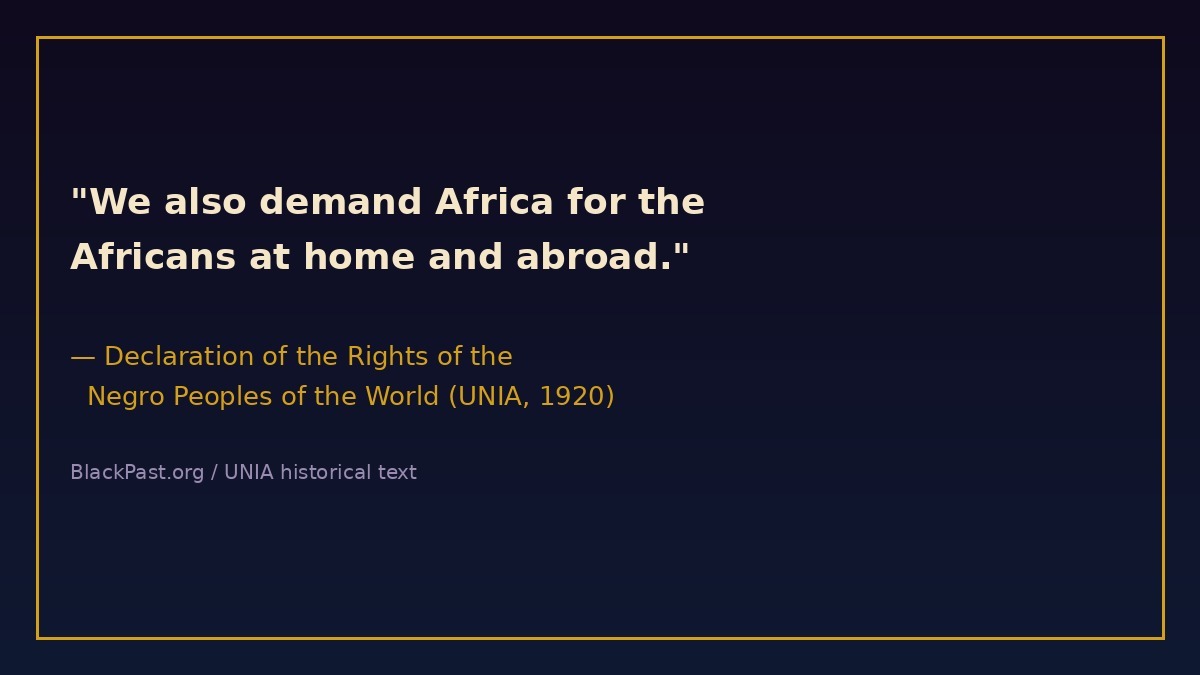
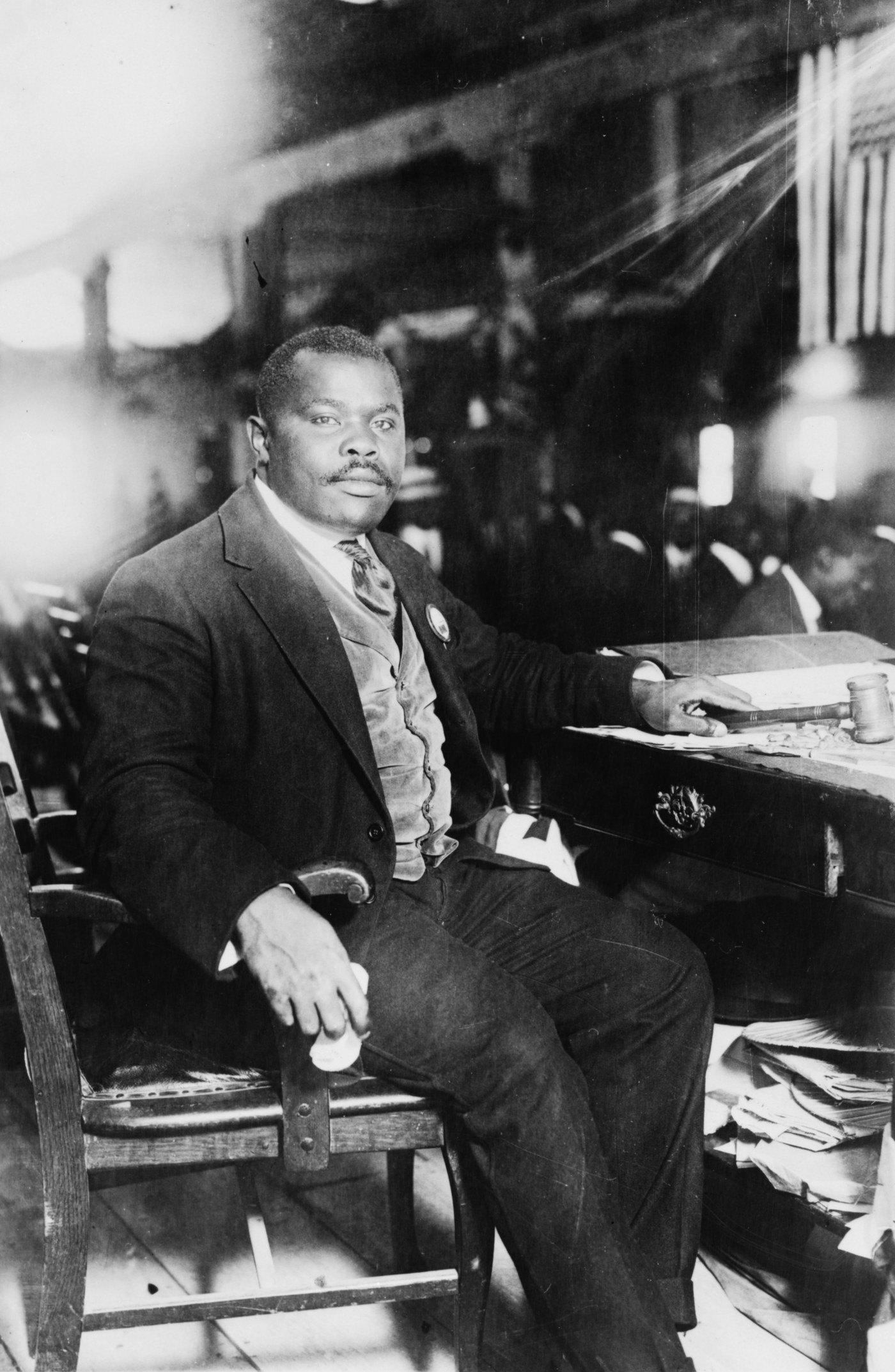
In August 1920, at Liberty Hall in New York, the Universal Negro Improvement Association (UNIA) adopted the Declaration of the Rights of the Negro Peoples of the World. Point 13 of that declaration states: “We believe in the freedom of Africa for the Negro people of the world, and by the principle of Europe for the Europeans and Asia for the Asiatics, we also demand Africa for the Africans at home and abroad.” That sentence, often shortened to Garvey’s famous call, was not poetry for a parade. It was a charter of self-determination.
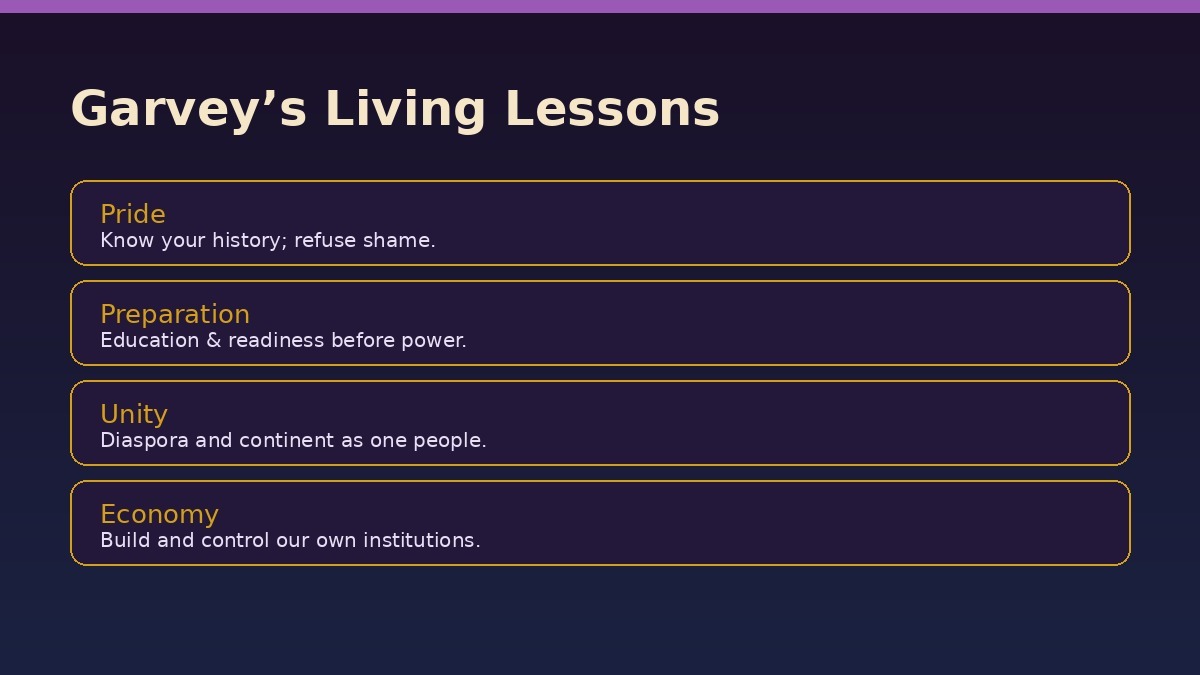
Marcus Mosiah Garvey, born in Jamaica in 1887, built the largest mass movement of people of African descent in the early twentieth century. Through the UNIA and African Communities League, chapters rose across the Americas, the Caribbean, Europe, and Africa. His message was practical: racial pride, economic organization, education, and preparation for power. PBS’s American Experience notes that Garvey’s teachings became a main ideological current feeding later Pan-African work — including the spirit that animated the 1945 Manchester Pan-African Congress and inspired independence leaders such as Kwame Nkrumah, whose Ghana would later fly a Black Star recalling Garvey’s maritime dream.What still matters for Soul Journey of Life villagers today is not costume history — it is method. Garveyism insisted on preparation: know your history, build institutions, control resources, educate the young, and link the diaspora to the Motherland as one people. Point 27 of the same 1920 Declaration affirms: “We believe in the self-determination of all peoples.” Point 30 demands “an unlimited and unprejudiced education for ourselves and our posterity forever.” Unity without readiness is sentiment. Readiness without unity is lonely struggle. Garvey pressed for both.
For Africans on the continent, African Americans, Caribbeans, and the wider Black world, the work continues in quiet, serious forms: supporting African enterprise, teaching accurate history, healing community health, building trade and tech that keep value among us, and remembering that dignity is practiced daily — not leased from empires. Garvey’s challenge still stands under one sky: prepare, unite, and claim the future with our own hands.
Watch: Marcus Garvey and the Universal Negro Improvement Association (NBC News Learn)
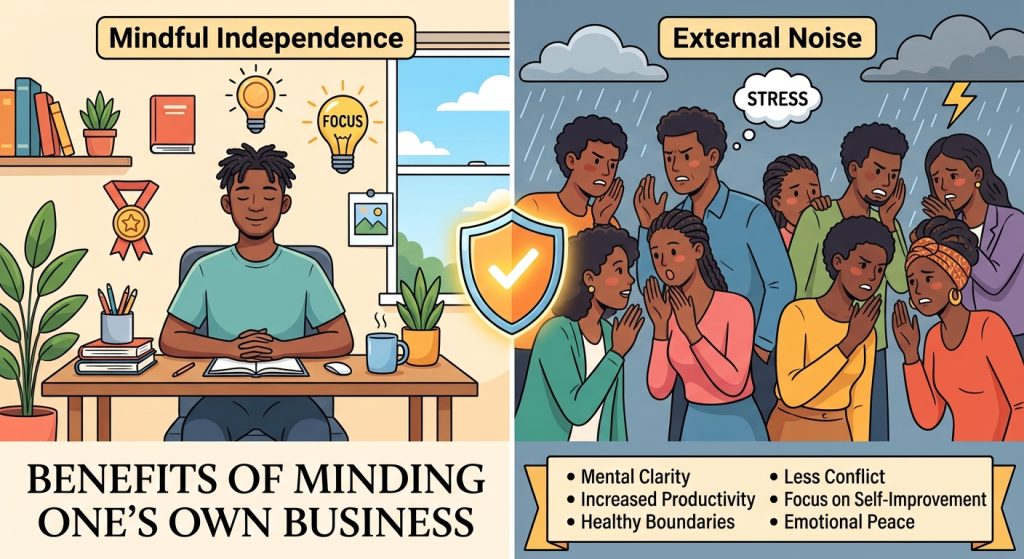
In the warmth of our village, we learn from the wisdom passed down through generations and from the teachings of the Qur’an, which reminds us in Surah Hujurat, “And do not spy on one another.” This wisdom teaches us the importance of respecting each other’s private matters.
Respecting Boundaries:
Just as each home in our village has its own fence, each life has its boundaries that deserve respect. Acknowledging these limits builds trust and peace within the community.
Cultivating Peace:
By focusing on our own matters, we cultivate peace in our hearts and in our community. This peace spreads like the shade of a baobab tree, offering comfort to all who rest beneath it.
The Wisdom of Silence:
The Prophet Muhammad (peace be upon him) taught us, “Whoever believes in Allah and the Last Day should speak a good word or remain silent.” There is profound wisdom in choosing silence over unnecessary interference in others’ affairs.
Fostering Personal Growth:
When we mind our own business, we give ourselves the space to grow. Just as a seed needs space to become a tree, we need space to reach our full potential.
Conclusion:
In closing, let us walk through life with gentle footsteps, respecting the privacy of others just as we cherish our own. In doing so, we build a village not just of homes, but of dignity and mutual respect.
Technology on the African continent is not a side story. It is becoming the wiring of unity — how traders get paid, how small businesses reach buyers across borders, and how young builders refuse to wait for permission to invent.
Across Africa, fintech and digital infrastructure are turning old frictions into design problems. Sending money to a neighbouring country once meant slow, expensive routes through foreign intermediaries. Instruments tied to the African Continental Free Trade Area (AfCFTA) — including the Pan-African Payment and Settlement System (PAPSS), developed with Afreximbank and African central banks — aim to make cross-border payments clearer, faster, and more often settled in African currencies. That is not mere convenience. It is payment sovereignty in practice.
Digital trade protocols and platforms are trying to do for documents, compliance, and matchmaking what rails do for money: shrink the distance between an SME in one country and a buyer in another. Startups and fintechs experimenting with AI for fraud checks, onboarding, and trade intelligence are part of that push — tools meant to serve African commerce, not extract from it. Progress is uneven. Licensing, customs modernization, and trust still decide whether a brilliant app becomes everyday life. But the direction of travel is unmistakable: Africa building for Africa.
For Pan-Africans on the continent and in the diaspora, the lesson is practical. Support African-built platforms. Learn the rails. Teach the next generation that coding, payments, and trade tech are forms of liberation work — quiet, serious, and shared under one sky.
Watch: Introducing the AfCFTA Pan-African Payment & Settlement System (PAPSS)
Today’s ~60s brief: Ghana reframes reparations as financing, restitution, and development—not a single cheque—while CARICOM prepares Barbados talks to deepen Africa–diaspora solidarity.
Watch the clip. Featured still: night-sky violet desk with official SJOL logo + “SJOL News.”
African unity is not a slogan for conference halls. It is a practical path to dignity — how we trade, how we build, and how we refuse to live forever as someone else’s market.
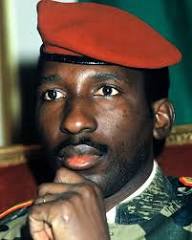
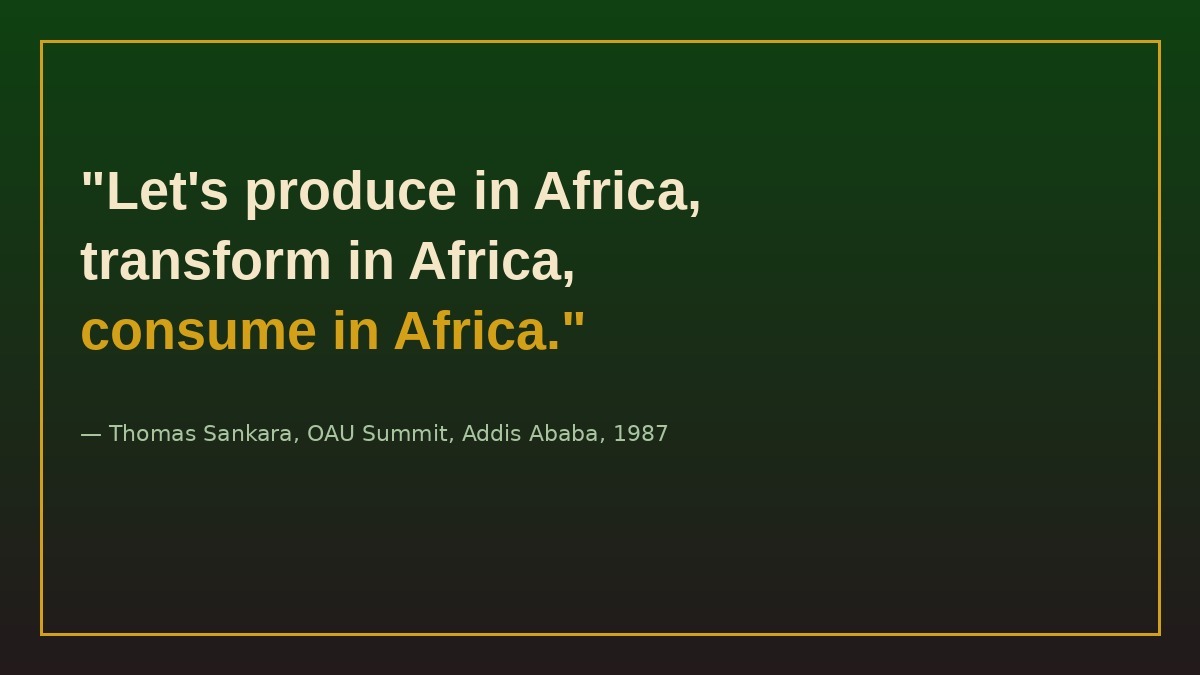
In July 1987, at the Organisation of African Unity summit in Addis Ababa, Thomas Sankara put it plainly: “Let’s produce in Africa, transform in Africa, consume in Africa.” He added that Africans should undertake to live as Africans — “the only way to live free and to live in dignity.” Those words were not nostalgia. They were a blueprint for economic self-determination.
Today, that blueprint has a continental instrument: the African Continental Free Trade Area (AfCFTA). Signed in Kigali in 2018, entering into force in 2019, and opening for trading in January 2021, AfCFTA is one of Agenda 2063’s flagship projects. Its aim is straightforward and historic — make it easier for African goods, services, and businesses to move across African borders, so the continent can speak with a stronger voice in world trade.
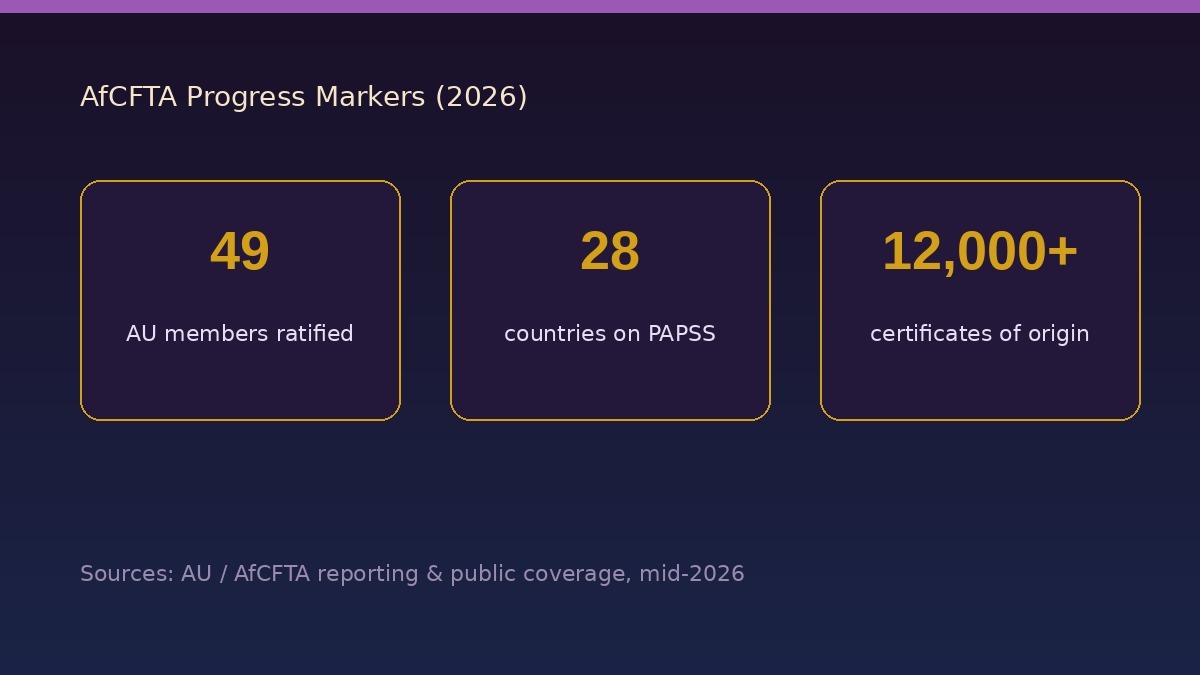
Progress is real, and still unfinished. By mid-2026, public reporting indicated that 49 of 54 signatory states had deposited instruments of ratification (Eritrea remaining outside the signature circle). The Guided Trade Initiative has expanded participation. The AfCFTA Secretariat has reported thousands of certificates of origin in use — a practical signal that preferential trade is being claimed, not only debated. The Pan-African Payment and Settlement System (PAPSS) has been connecting more countries, banks, and payment switches so cross-border payments can clear in African currencies rather than always routing through foreign intermediaries.
None of this erases the hard work still ahead: customs modernization, non-tariff barriers, incomplete tariff schedules, and uneven domestic implementation. A free-trade area on paper becomes freedom in practice only when a small producer in Accra, a manufacturer in Nairobi, or a tech firm in Lagos can ship, get paid, and compete without drowning in delay. That is why customs reforms, digital trade protocols, and payment rails matter as much as the treaty itself.
For Pan-Africans, Africans on the continent, and Black communities in the diaspora, AfCFTA is more than policy. It is a chance to rebuild what colonial borders fractured — supply chains that keep value at home, industries that employ our youth, and markets that reward African creativity. Sankara’s challenge still stands: produce what we need, consume what we produce, and build unity against what divides us from outside and within.
Stay awake. Trade with intention. Support African enterprise. Teach the next generation that unity is not waiting for permission — it is work we do with our hands, our capital, and our conscience.
— Soul Journey of Life / Light Dome Abdulwadud David Lee Cudgel (QUESTMAN)